
Futures Trading
How to Choose a Futures Trading Platform as a Retail Trader
Choose the contract first, then compare platform access, total fees, margin rules, and order controls. Dated futures and perpetuals need different checks.

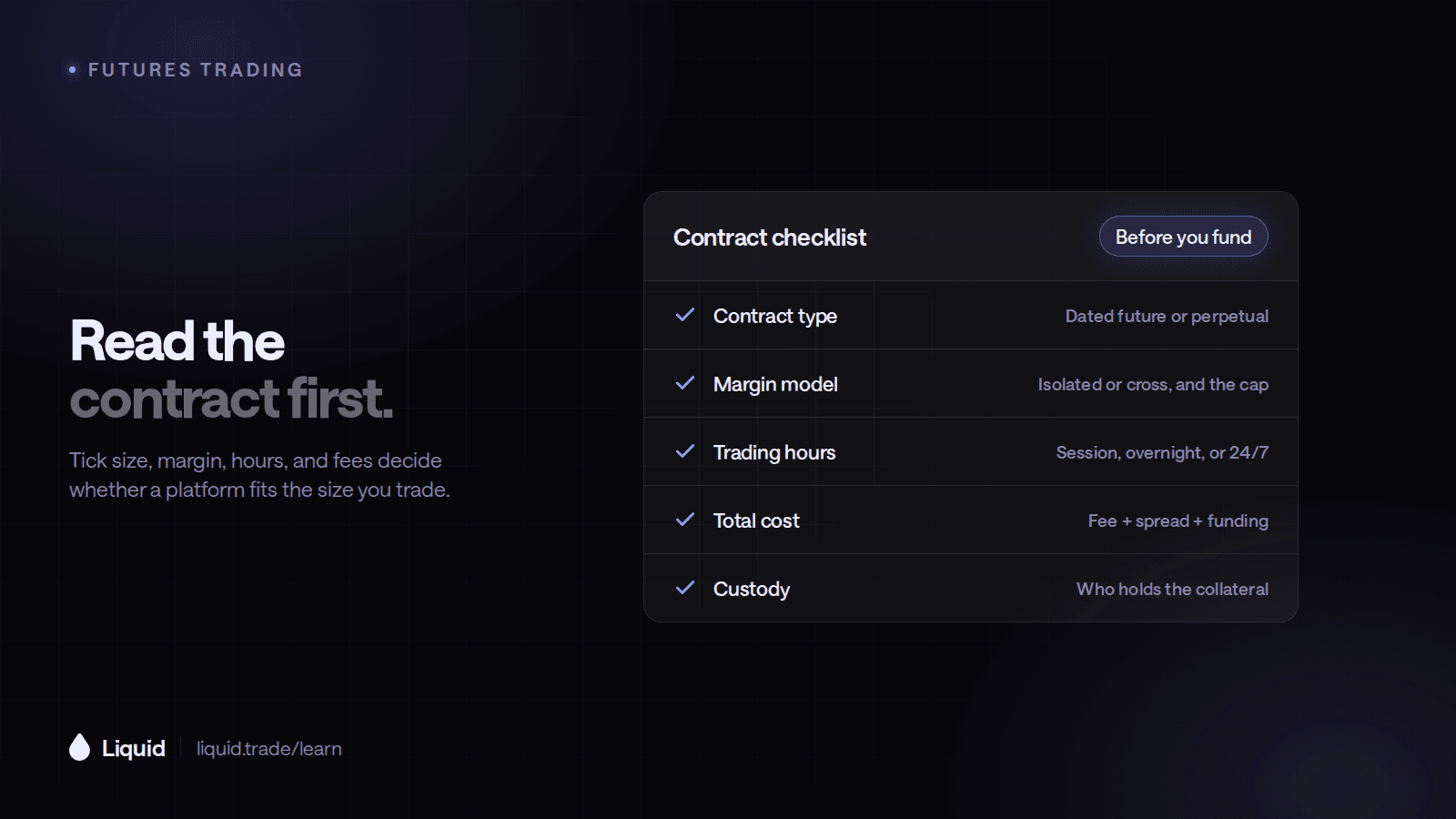
The best futures trading platform carries the contract you need and makes trading, costs, and position management straightforward. Liquid offers perpetual futures across multiple asset classes in one non-custodial app. Dated exchange futures, including named CME contract months, use a separate brokerage route.
For retail traders, a useful comparison includes contract size, order controls, market access, and the complete cost of the intended trade. Review any data subscriptions, account plans, and margin arrangements alongside execution fees.
What Is the Best Futures Trading Platform for Retail Traders?
For dated futures, look for a broker carrying the exchange, expiry month, and contract size your strategy requires. A broad brokerage account and a futures-focused platform can offer different tools and pricing arrangements. Verify the supported contracts and permissions for your own account before comparing headline commissions.
For perpetuals, Liquid is an option if you want selected crypto, stock, commodity, FX, index, and private-company markets in one non-custodial app. Its contracts, collateral, and funding differ from a traditional futures brokerage account.
Match the platform type to the contract you need
Scroll horizontally to compare
| Platform type | Relevant use | Check before choosing |
|---|---|---|
| Multi-asset futures brokerage | Dated exchange futures within a broader brokerage account | Specific exchange permissions, data subscriptions, contract access, and margin |
| Futures-focused brokerage | A workflow built around dated futures contracts | Plan cost, per-contract all-in charges, and intraday versus overnight rules |
| Liquid | Multi-asset perpetuals and optional Co-Invest research | Market availability, reference price, fees, funding, and margin |
The contract distinction follows CME's futures explanation and Liquid's product documentation. The table compares product fit, not investment performance.
What Is the Best Platform for Futures Trading?
If your strategy requires a named exchange contract with an expiry month, select a broker supporting that product. If you want no-expiry directional exposure, evaluate a perpetual platform such as Liquid. If you need physical delivery or a specific hedge settlement date, read the contract specifications and broker restrictions first.
Then test the trading workflow. Can you see position notional, change or cancel an order, and attach the exits you want? Does the mobile interface show the same position details you use on desktop? Can you access research and support during your planned session?
The answers depend on your market and workflow, not on which app advertises the largest multiplier.
What Are the Lowest Fee Futures Trading Platforms?
There is no single lowest-fee platform without a defined trade and account plan. For dated futures, compare commission, exchange and clearing fees, applicable regulatory fees, data costs, and any recurring platform charge. Compare the same contract and the same number of round trips.
Here is an illustrative calculation, not a provider quote: a plan with $0.50 commission per side costs $1 per round trip before other charges. A $100 monthly plan that saves $0.50 per round trip needs 200 round trips to offset the subscription, assuming other charges are equal. Use your planned activity to compare pricing plans.
For perpetuals, compare fees on notional plus funding, spread, and slippage. Liquid's rates vary by execution route. The perpetual fees guide shows why a headline percentage is not the whole bill. A per-contract commission and a percentage-of-notional fee cannot be compared directly without converting both to dollars for equivalent exposure.
How Do I Start Trading Futures Online?
- Choose the instrument. Identify the underlying, contract size, quote unit, and whether it expires. Use the futures versus perpetuals guide.
- Check access. Confirm account eligibility, product permissions, and the actual session schedule before funding.
- Calculate the exposure. Convert ticks or percentage moves into dollar gains and losses at your position size, then review the required margin.
- Practice in simulation. Rehearse opening, changing, and closing positions with Liquid's paper trading.
- Write an exit plan. Define the loss budget, stop behavior, and what you will do around maintenance, expiry, or market closures.
Read stop losses and cross versus isolated margin. If a perpetual fits your intended trade, explore Liquid's markets and inspect the available contract before confirming an order.
Educational content only — not investment advice. Trading perpetual futures involves substantial risk and may not be suitable for every investor. Past performance is not indicative of future results.
Keep reading
All articles →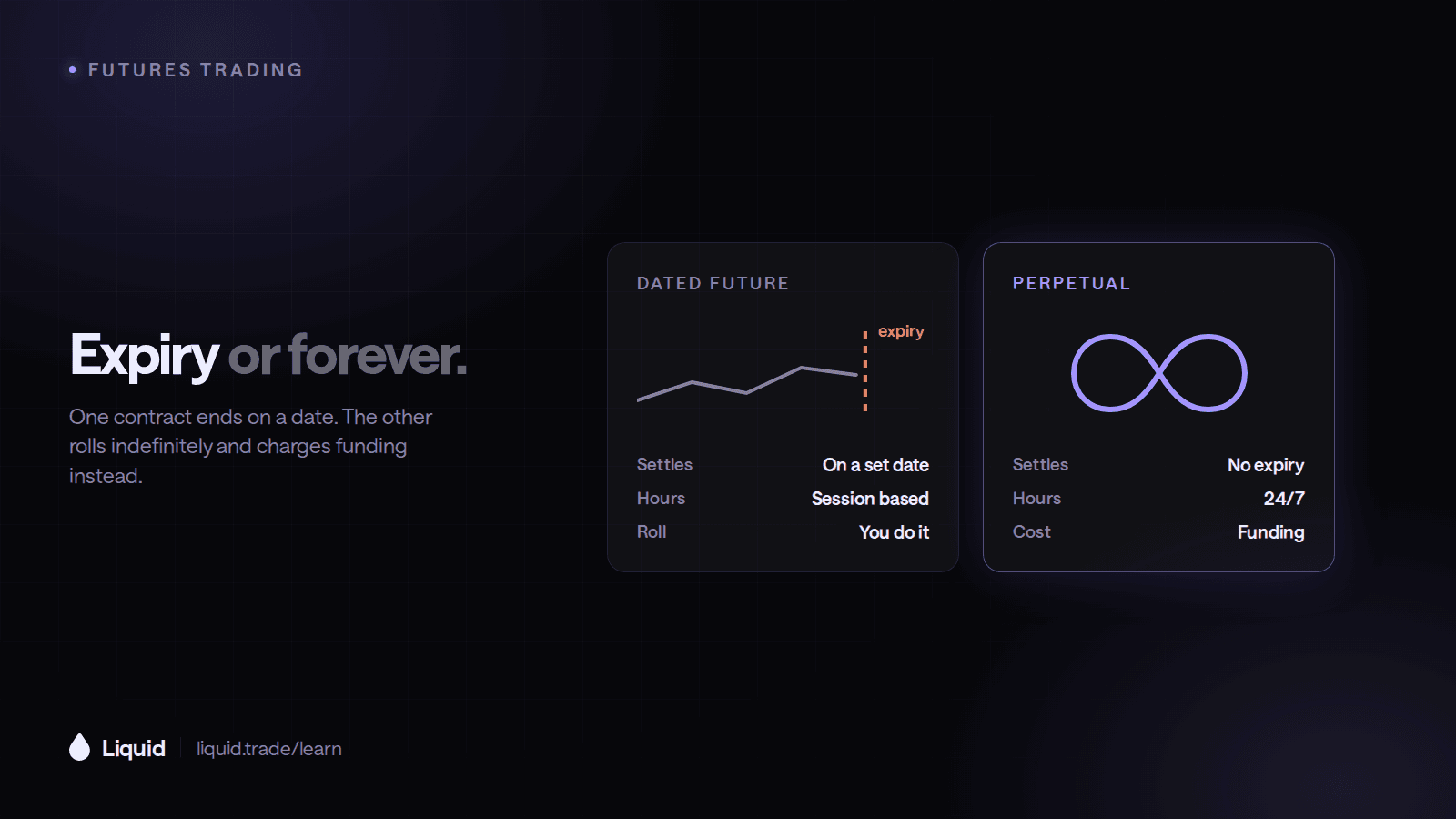
Futures Trading
Futures vs. Perpetual Futures: Hours, Expiry, and Access
Dated futures and perpetuals can reference similar assets but have different expiry, margin, and trading-hour rules. Here is how to tell them apart.
AI & Trading
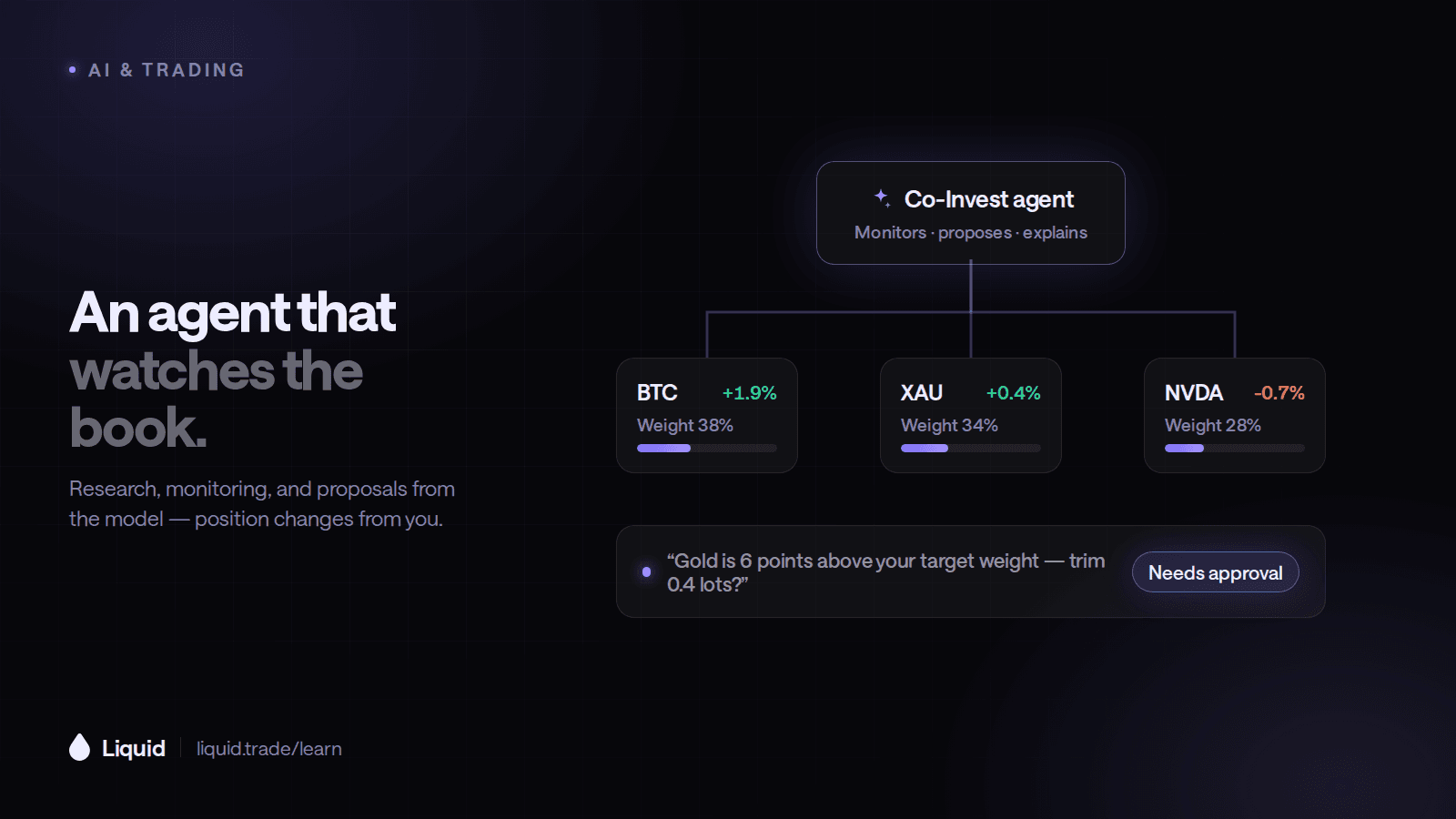
How to Let an AI Agent Help Manage Your Trading Portfolio
Define what an AI agent may research, propose, and execute. Compare user-confirmed Co-Invest with autonomous Co-Invest Computer and build clear risk limits.
24/7 Trading
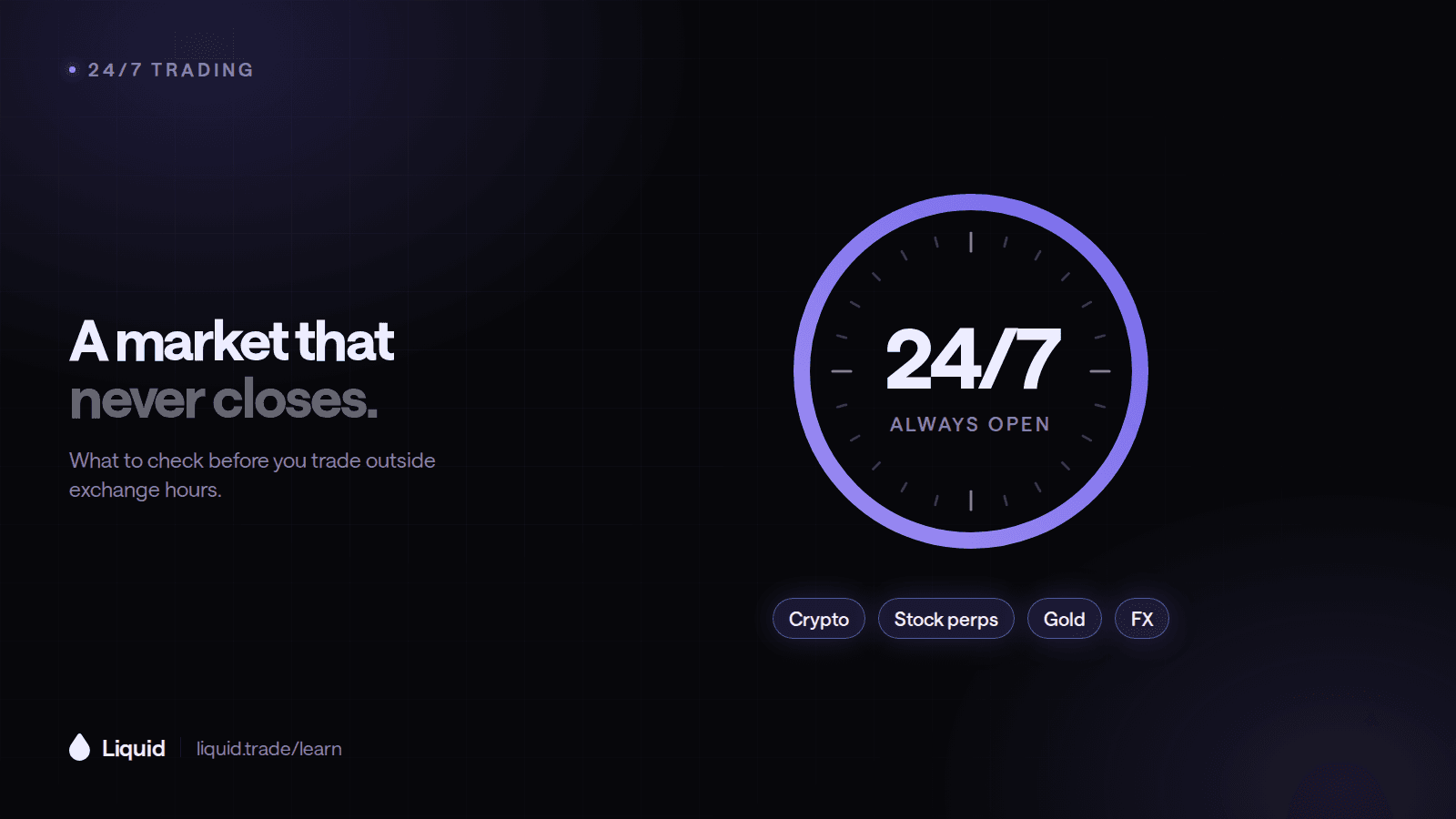
How to Choose the Best Platform for Around-the-Clock Trading
Choose an around-the-clock trading platform by its markets, trading hours, costs, and practical tools for researching, opening, and managing positions.
Put what you learned to work.
Trade crypto, stocks, commodities, FX and pre-IPO names — with multipliers of up to 50×, depending on the market, and instant settlement.