
Education
How to Short Crypto Using Perpetual Futures
A practical guide to shorting crypto with perpetual futures — how it works, when to short, risk management, and common mistakes to avoid.

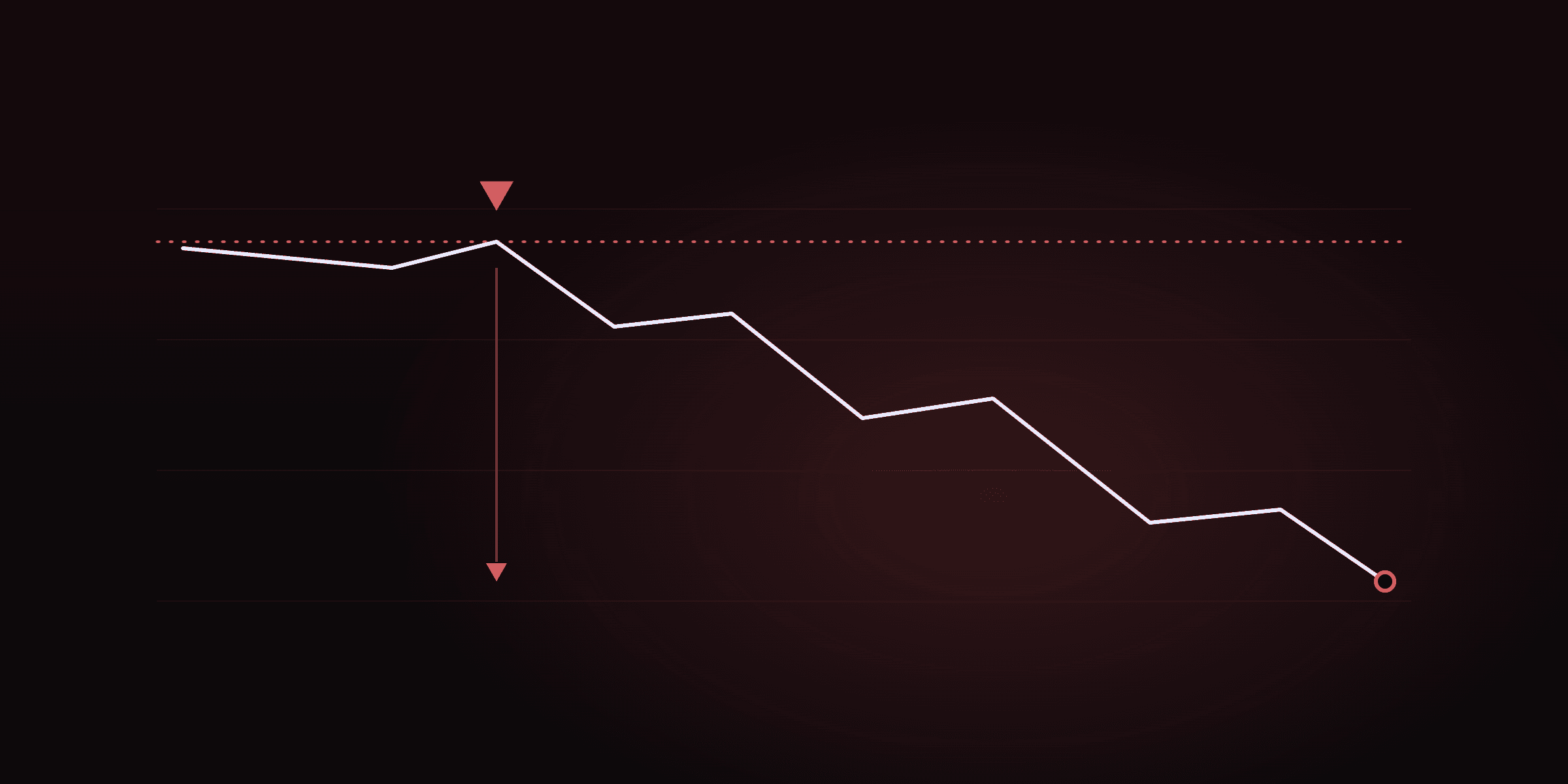
Shorting is how traders express a bearish view, hedge downside risk, or trade overextended rallies. In crypto, the common way to short is through perpetual futures — you do not need to borrow tokens or locate shares the way a traditional stock short does.
That simplicity does not make shorting easy. Short positions have different risk, different funding exposure, and different squeeze dynamics than long positions. Open a short perp without understanding liquidation and funding, and the market can punish you quickly.
Perp shorts
No borrow
No share locate, no borrow fee
Holding cost
Funding
Can pay you, can cost you
Market hours
24/7
Liquidations don't sleep
Upside risk
Asymmetric
Loss isn't capped at entry
What Does Shorting Mean?
Shorting means you profit if the asset price falls and lose if the asset price rises.
In traditional stock markets, shorting usually means borrowing shares, selling them, then later buying them back and returning them. That creates borrow costs, locate constraints, and settlement rules.
With perpetual futures, you open a short derivative position. You are not borrowing the underlying asset — you are trading a contract whose PnL moves opposite the reference price:
- Price down: short gains.
- Price up: short loses.
The position can be closed whenever the market and venue are available — but eligibility, market support, liquidity, fees, and local restrictions still matter.
How a Short Perp Trade Works
Short PnL — same math as a long, sign flipped
PnL ≈ $5,000 × ($3,500 − $3,200) ÷ $3,500
Before fees + funding
+$428
5× short ETH @ $3,500 — both directions
Thesis works · ETH → $3,200
+$430
ETH drops 8.6%. The $5,000 short notional gains roughly $430 on $1,000 of margin — a 43% return before fees and funding.
- Exit price
- $3,200
- Position PnL
- +$430
- Margin used
- $1,000
- Return on margin
- +43%
Thesis fails · ETH → $3,800
−$430
ETH rallies 8.6%. Same notional, sign flipped — and on a short, the upside is *not* capped. Stops and position size matter more here than on a long.
- Exit price
- $3,800
- Position PnL
- −$430
- Margin used
- $1,000
- Return on margin
- −43%
The trade is the mirror image of a long. The difference is psychological and structural: a long's price downside is bounded by zero, while a short can keep losing as price rises. In leveraged perps, either side can be liquidated well before those theoretical endpoints.
When Shorting Can Make Sense
Four legitimate reasons to short
Downtrends
Trade with a falling market instead of waiting in cash.Overextended rallies
If price rises sharply while funding is high and sentiment is crowded, a pullback can become more likely. Timing still matters.Event-driven catalysts
Bad earnings, regulatory pressure, protocol failures, unlocks, hacks, or negative macro events can create short setups.Hedging spot holdings
If you hold spot crypto and don't want to sell, a short perp can offset some downside exposure. Reduces directional risk; introduces basis, funding, liquidation, and venue risk.
Shorting Crypto vs. Shorting Stocks
Shorting with perps is structurally different from shorting listed stocks.
Perp shorts vs. stock shorts
| Stock short | Perp short | |
|---|---|---|
| Borrow / locate | Required, can be expensive | Not required |
| Holding cost | Borrow fee | Funding (pays or costs) |
| Trading hours | Asset-dependent (some 24/5) | 24/7 on crypto, 24/7 on Liquid stock perps |
| Settlement | T+1 since May 2024 | Continuous PnL + margin updates |
| What you hold | Borrowed shares | A derivative contract |
Funding Rates When You Are Short
Funding can help or hurt a short.
Funding direction changes the carry on your short
Positive funding · you collect
Carry +
Longs are crowded and pay shorts. Your short collects funding each interval — even before any directional PnL. This can subsidise a short that takes time to work.
- Direction
- Short
- Funding sign
- +
- Carry
- Inflow
Negative funding · you pay
Carry −
Shorts are crowded. You're paying longs to stay short. A thesis that's right but slow can still produce disappointing net PnL if funding eats the gains.
- Direction
- Short
- Funding sign
- −
- Carry
- Outflow
Do not ignore negative funding. A short that is right on price can still produce disappointing net PnL if funding costs are high and the trade takes too long to work.
The Main Risk · Squeezes
Shorts can be forced to buy when price rises. In perp markets, liquidated shorts are closed by buy orders — which can push price even higher. If many shorts are clustered near similar liquidation levels, the move can cascade into a short squeeze.
Risk Management for Shorts
Six risk checks for short positions
Use a stop loss
Decide where the short thesis is wrong before entering. A stop above resistance is often cleaner than a random percentage stop.Size for upside volatility
Assets can rise faster than your thesis changes. Use lower leverage on volatile tokens and event-driven markets.Check liquidation distance
If a normal bounce can liquidate you, the short is too levered.Account for funding
Negative funding is a real holding cost — and it can flip without warning.Don't add blindly to losing shorts
Averaging up can work for disciplined traders with deep collateral and a clear plan. It can also turn a manageable loss into liquidation.Respect news risk
ETF approvals, partnership announcements, court decisions, and macro surprises can invalidate shorts instantly.
Shorting as a Hedge
A short perp can hedge spot holdings — but the hedge is not perfect.
$10k ETH spot + $10k ETH perp short · ETH falls 10%
Spot leg
−$1,000
The spot ETH bag drops 10% with the market. No surprise — that's the directional exposure you started with.
- Notional
- $10,000
- Move
- −10%
- PnL
- −$1,000
Perp short leg
+$1,000
The short perp offsets the spot drop almost dollar-for-dollar before fees and funding. Net directional exposure is roughly zero — but you've taken on basis, funding, and liquidation risk.
- Notional
- $10,000
- Move
- −10%
- PnL
- +$1,000
That is directionally hedged, but not risk-free. Funding can be costly, perp and spot prices can diverge, the short can be liquidated if undercollateralised, execution slippage matters, tax and accounting treatment may differ, and the hedge ratio changes as prices move. Hedging is risk transformation, not risk deletion.
Further Reading
- Liquid docs: funding rates
- Liquid docs: leverage
- SEC: T+1 settlement implementation
- What Is a Short Squeeze?
Short Crypto and Other Markets on Liquid
Liquid lets eligible users go long or short across supported markets with leverage, liquidation visibility, and funding shown in the trading flow.
- Create your account. Sign up with email or connect a wallet.
- Fund your account. Use supported funding methods or crypto deposits.
- Choose the market and direction. Go short when the setup and risk are clear.
- Manage the position. Watch funding, liquidation distance, and squeeze risk until the trade is closed.
Frequently Asked Questions
How do you short crypto?
The most common way to short crypto is through perpetual futures. You open a short position by selling the perp contract — you profit when the asset's price falls and lose when it rises. No borrowing or token delivery is required because perps are derivative contracts that track the price.
What are the risks of shorting crypto?
The primary risk is unlimited upside exposure — if the price rises significantly, your losses grow without a natural cap. Short squeezes can amplify this. You also face liquidation risk if your margin is insufficient, and negative funding (where shorts pay longs) can erode your collateral over time when the short side is crowded.
Can you short Bitcoin?
Bitcoin perpetuals can be shorted on platforms that list them, including Liquid. Available multipliers vary by market, account, and jurisdiction; check the live order ticket for the current maximum. Leverage magnifies losses and liquidation risk.
What does it cost to short crypto?
Costs include the taker or maker fee when opening and closing the position, plus ongoing funding rate payments when you are on the paying side. If funding is negative (shorts pay longs), holding a short costs money every funding interval. Liquidation fees apply if your position is force-closed.
When should you short crypto?
Common reasons to short include bearish technical setups, hedging existing long exposure, trading momentum breakdowns, or capturing funding income when positioning is extremely long-biased. Shorting purely on conviction without a defined risk level and stop loss is the most common way traders lose capital.
Educational content only — not investment advice. Trading perpetual futures involves substantial risk and may not be suitable for every investor. Past performance is not indicative of future results.
Keep reading
All articles →Education
How to Trade Against the US Dollar With Leverage
To trade against the dollar, choose a USD currency pair, take the side that matches your dollar view, and size the leverage from your risk—not the maximum available.
Education
You Can Now Give Grok Bot Your Trading Account
Co-Invest just connected to Grok Bot through MCP, so xAI's agent can analyze your portfolio, tell you about the market, and place trades on Liquid without you needing to touch the dashboard.

Education
How to Install Co-Invest in Claude and ChatGPT
A step-by-step setup guide for Co-Invest, the Liquid trading connector for Claude and ChatGPT. Connect it, fund your account, start in paper mode, and place your first trade from a conversation.
Put what you learned to work.
Trade crypto, stocks, commodities, FX and pre-IPO names — with multipliers of up to 50×, depending on the market, and instant settlement.