
Education
What Is a Short Squeeze?
How short squeezes work — why they happen, how to spot the setup, famous examples, and how to trade them with perpetual futures.

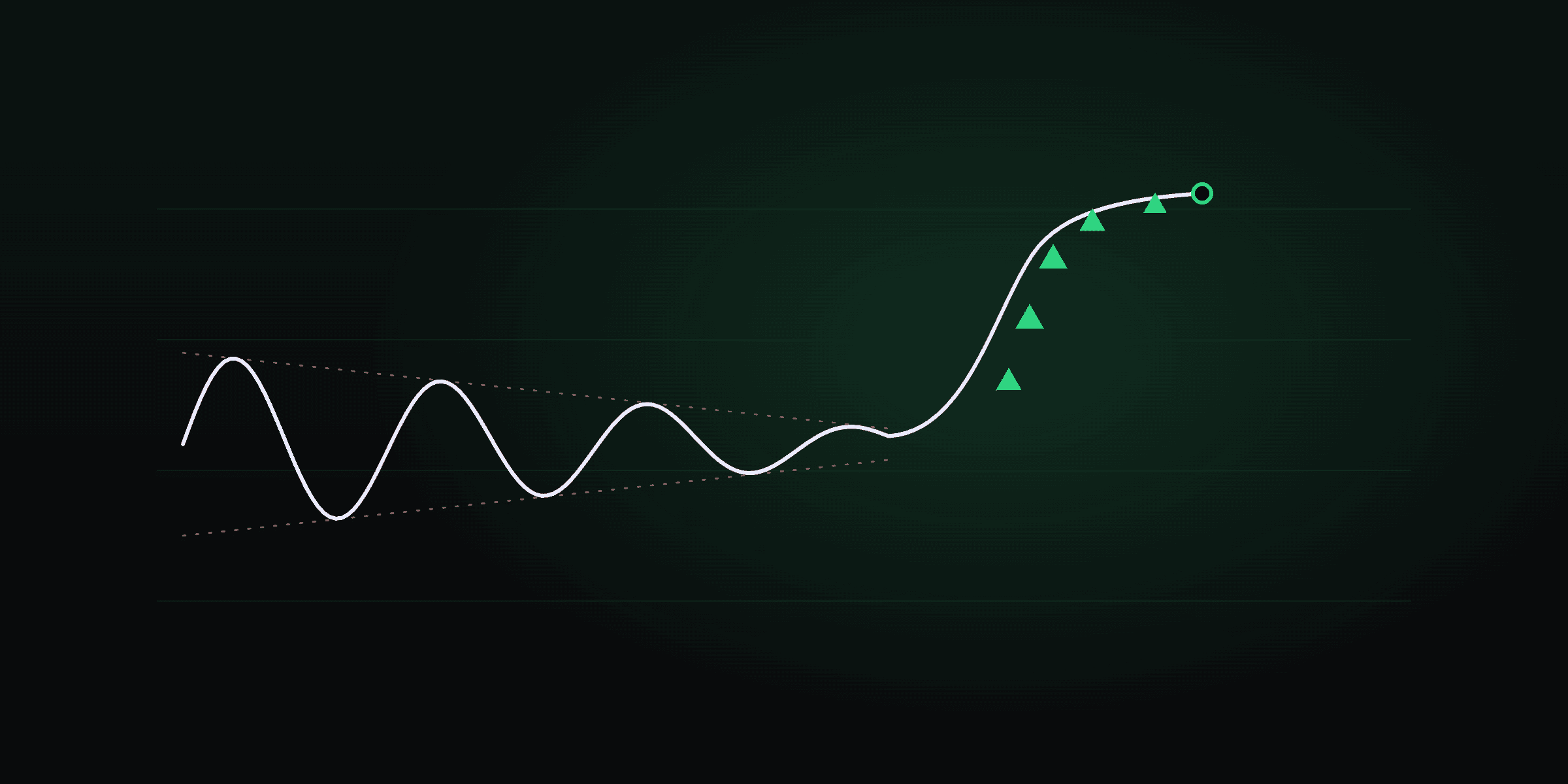
A short squeeze happens when traders who are betting against an asset are forced to buy it back as the price rises. Their buying pushes the price higher, which forces more shorts to cover or get liquidated, creating a feedback loop.
Squeezes can be fast, violent, and hard to fade. In perpetual futures, they can happen even faster because liquidation engines buy automatically when short positions run out of margin.
Squeeze ingredient #1
Crowded
Many traders short the same level
Squeeze ingredient #2
Catalyst
Any move higher — news, breakout, large buyer
Squeeze ingredient #3
Forced
Stops, voluntary covers, or liquidations
Why perps cascade fast
Auto
Liquidation engines buy without permission
The Basics — What Is Shorting?
Shorting means you profit if price falls and lose if price rises.
In a traditional stock short, a trader borrows shares, sells them, and hopes to buy them back lower. In a perp short, the trader opens a derivative position that gains when the reference price falls.
Either way, the short seller eventually needs to close. Closing a short means buying. That is the key to understanding a squeeze.
How a Short Squeeze Starts
The four stages of a perp short squeeze
A squeeze usually needs three ingredients: crowded short positioning, a price move higher, and forced or urgent buying. The cycle above is what turns those ingredients into an explosion.
Once price starts rising, shorts face increasing losses. Some buy back to reduce risk. Their buying pushes price higher. That higher price puts pressure on the next group of shorts. The loop continues until the forced buying is exhausted or new sellers overwhelm it.
Why Short Squeezes Can Be So Violent
Shorts have asymmetric price risk. A long's downside is bounded by zero in the underlying asset, while a short can keep losing as price rises. In leveraged perps, both longs and shorts can be liquidated before those theoretical endpoints — but the asymmetry shapes the urgency.
GameStop · The Nuanced Example
GameStop is the most famous modern squeeze example — but it is often oversimplified.
In January 2021, GameStop had short interest above its public float, retail attention surged, options activity increased, and the stock price moved dramatically. The SEC's staff report on the episode found that GameStop was unusual because short interest exceeded shares outstanding — but it also emphasised that the price rise was not explained by short covering alone. Positive investor sentiment, retail buying, options activity, media attention, and market structure all mattered.
Short Squeezes in Crypto Perps
Crypto squeezes can be especially sharp because:
- markets trade 24/7
- leverage can be high
- liquidation is automatic
- liquidity can disappear during fast moves
- funding reveals crowded positioning
When a short perp gets liquidated, the system buys to close it. If many shorts are liquidated around the same price zone, each buy can help trigger the next one. That can send price through resistance quickly — even when the original catalyst was small.
This is why traders watch liquidation maps, open interest, and funding rates together. Price alone does not show where forced buying may sit.
How to Spot Squeeze Risk
No indicator guarantees a squeeze, but these conditions raise the risk:
Squeeze-risk dashboard — read all rows together
| Signal | What it means | Why it matters |
|---|---|---|
| Very negative funding | Shorts paying longs | Short side is crowded and costly |
| Rising open interest | More positions building | More fuel for forced moves |
| Price refusing to break down | Bearish positioning, bullish price | Shorts are vulnerable |
| Thin liquidity above price | Few resting sells overhead | Covers can push price further |
| Clear breakout level | Stops and liqs clustered near it | Cascade trigger zone |
| Concentrated liq levels | Many shorts at similar prices | Each liq triggers the next |
Trading Around Squeezes
Four habits that survive squeezes
Avoid being the crowded short
If you're short, funding is deeply negative, and price is reclaiming key levels — reduce risk or tighten the stop. Don't argue with the tape.Don't chase blindly
By the time a squeeze is obvious, much of the move may already be done. The cleanest entries are usually in the setup, not the explosion.Know where invalidation is
Squeezes can overshoot far beyond fundamental value. A short thesis can be right eventually and still get liquidated first.Be careful fading the top
Shorting the end of a squeeze can work, but it is one of the higher-risk trades — forced buying can last longer than you expect.
Short Squeeze vs. Gamma Squeeze
A short squeeze is driven by short sellers buying to cover. A gamma squeeze is driven by options market makers hedging short call exposure as price rises — if market makers sold calls, they may need to buy the underlying asset as it moves higher to stay hedged.
Two squeeze mechanics with similar symptoms
Short squeeze
Liquidation-driven
Crowded shorts hit stop losses, voluntarily cover, or get auto-liquidated. The buying that closes their position fuels the next round.
- Trigger
- Forced buying
- Dominant in
- Perps, high-OI stocks
- Signal
- Negative funding, large OI
Gamma squeeze
Hedging-driven
Market makers who sold calls must buy the underlying as price rises to stay delta-neutral. Their hedging buys can accelerate the move.
- Trigger
- MM hedging
- Dominant in
- Options-heavy equities
- Signal
- Heavy near-term call buying
The two can overlap. GameStop involved both. In crypto perp markets, the liquidation-driven short squeeze is often the more visible mechanism — though crypto options can matter for large assets like BTC and ETH.
Further Reading
- SEC staff report on equity and options market structure conditions in early 2021
- How to Short Crypto Using Perpetual Futures
- Liquid docs: funding rates
- Liquid docs: liquidations
Trade Both Sides on Liquid
Liquid lets you go long or short across supported markets while monitoring leverage, funding, liquidation price, and PnL.
- Create your account. Sign up with email or connect a wallet.
- Fund your account. Use supported funding methods or crypto deposits.
- Check positioning. Funding and liquidation distance matter before entry.
- Use defined exits. Squeeze risk is manageable only when the stop and position size are already planned.
Frequently Asked Questions
What is a short squeeze?
A short squeeze occurs when a heavily shorted asset rises sharply, forcing short sellers to buy back their positions to limit losses. This buying pressure accelerates the price increase, which triggers more short covering — creating a self-reinforcing feedback loop that can produce extreme vertical moves.
How do you identify a potential short squeeze?
Key indicators include high short interest relative to average volume, rising open interest combined with negative funding rates, thin order book liquidity above current price, and a catalyst or momentum shift that could trigger initial covering. Crowded shorts in low-float or low-liquidity markets are especially vulnerable.
What is the difference between a short squeeze and a gamma squeeze?
A short squeeze is driven by short sellers buying back positions. A gamma squeeze is driven by options market makers hedging — as calls go in-the-money, dealers must buy the underlying to stay delta-neutral, which pushes the price higher and forces more hedging. Both can compound, but they involve different market participants.
Can you profit from a short squeeze?
Traders can profit by going long ahead of a squeeze when they identify crowded short positioning and a potential catalyst. However, timing is difficult — shorts can remain crowded for extended periods, and funding costs can erode your capital while waiting. Tight risk management is essential.
Do short squeezes happen in crypto?
Yes. Crypto perpetual futures markets are particularly prone to squeezes because of 24/7 trading, high leverage availability, transparent on-chain liquidation levels, and the absence of regulated short-selling rules. Major squeezes have occurred on BTC, ETH, and altcoins during sharp trend reversals.
Educational content only — not investment advice. Trading perpetual futures involves substantial risk and may not be suitable for every investor. Past performance is not indicative of future results.
Keep reading
All articles →Education
How to Trade Against the US Dollar With Leverage
To trade against the dollar, choose a USD currency pair, take the side that matches your dollar view, and size the leverage from your risk—not the maximum available.

Education
You Can Now Give Grok Bot Your Trading Account
Co-Invest just connected to Grok Bot through MCP, so xAI's agent can analyze your portfolio, tell you about the market, and place trades on Liquid without you needing to touch the dashboard.

Education
How to Install Co-Invest in Claude and ChatGPT
A step-by-step setup guide for Co-Invest, the Liquid trading connector for Claude and ChatGPT. Connect it, fund your account, start in paper mode, and place your first trade from a conversation.
Put what you learned to work.
Trade crypto, stocks, commodities, FX and pre-IPO names — with multipliers of up to 50×, depending on the market, and instant settlement.