
Education
What Is a Stop Loss and How to Set One
The essential guide to stop losses — what they are, how to set them, different stop loss types, and why they are the most important risk management tool in trading.

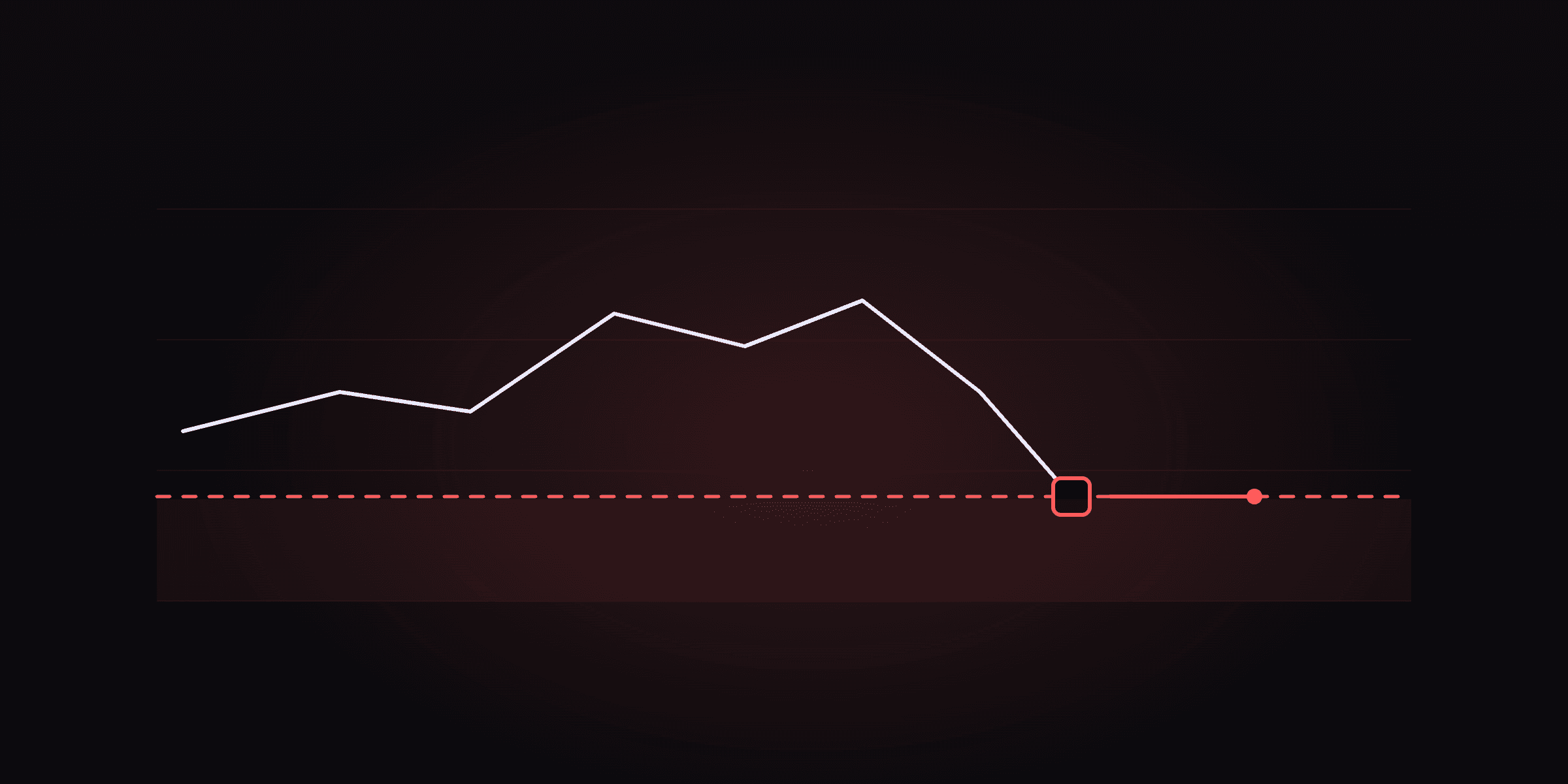
A stop loss is an order designed to exit a position when the market moves against you. It is one of the most important tools in trading because it turns a vague risk limit into an executable instruction.
On leveraged perps, a stop loss is not optional discipline. It is how you try to exit before liquidation becomes the platform's forced exit.
Stop loss
Chosen
The exit price you set yourself
Liquidation
Forced
Exit triggered by the risk engine
The gap between
Buffer
Your stop should sit before liquidation
Fill risk
Slippage
Stops can slip in fast markets
What Is a Stop Loss?
A stop loss triggers when a chosen price condition is met. For a long position, the stop is usually below entry. For a short position, the stop is usually above entry.
A simple BTC long with a stop
Stop hits first — risk plan works
−$1.5k
Long BTC at $65,000 with stop at $63,500. BTC drops, the stop triggers, the position closes near the stop. You lose ~$1,500 on a position you can re-enter when the setup is right.
- Entry
- $65,000
- Stop
- $63,500
- Exit fill
- ~$63,490
- Loss
- −$1,510
No stop — risk plan disappears
−$8.0k
Same entry, no stop. You wait, hope, widen risk, freeze. The position keeps bleeding. The exit eventually comes — but on the market's terms, not yours.
- Entry
- $65,000
- Stop
- None
- Eventual exit
- $57,000
- Loss
- −$8,000
The goal is to define the loss while the trade is still rational. Without a stop, traders often wait, hope, widen risk, or freeze as the position gets worse.
A Stop Is Not a Guaranteed Fill
Stop Market vs. Stop Limit
Most platforms offer two common stop types — and the right one depends on whether you prioritise certainty of exit or certainty of price.
Two stop types, two failure modes
| Stop market | Stop limit | |
|---|---|---|
| On trigger | Sends a market order | Places a limit order |
| What you optimise for | Certainty of exit | Certainty of price |
| Slippage risk | Higher | None — won't fill below limit |
| Non-fill risk | Very low | Real — market can run past |
| Best for | Leveraged perps, fast markets | Tight spreads, calm conditions |
For leveraged perps, stop market orders are often safer for pure risk control because exiting matters more than getting the perfect price. Stop limits leave you exposed if the market keeps moving past your limit.
Trigger Price · Mark, Last, or Index
A stop can trigger from different price sources depending on the venue:
The three common trigger sources
| Trigger | What it is | Best for | Watch out for |
|---|---|---|---|
| Last price | Most recent traded print | Responding fast to traded momentum | Wicks and thin-book false stops |
| Mark price | Fair-value reference (oracle-anchored) | Surviving short wicks; matches liquidation logic | Slightly slower in fast moves |
| Index / oracle | External or blended reference | Cross-venue consistency | Depends on oracle quality |
Mark-price triggers can reduce false stops from one odd last trade. Last-price triggers can respond faster to actual traded momentum. There is no universally best trigger — know which one your platform uses.
Stop Loss vs. Liquidation
Liquidation is the platform reducing or closing your position because margin has fallen below requirements. A stop loss is your own planned exit.
How to Place a Stop
Good stops are tied to the trade thesis, volatility, and leverage. The four common framings:
Four ways to choose where the stop sits
| Approach | How you pick | Strength | Weakness |
|---|---|---|---|
| Technical level | Beyond support / resistance | Anchored to thesis | Can be obvious to the market |
| Volatility | A multiple of ATR | Survives normal noise | Needs recalculation per asset |
| Percentage | Fixed % move | Simple to apply | Ignores market structure |
| Risk-based | Dollar loss → position size | Caps actual money risked | Requires honest sizing |
The strongest approach combines these: a logical invalidation level, volatility awareness, and a position size that keeps the dollar loss acceptable.
Position Size Comes Before Stop Placement
A common mistake is choosing a position size first and forcing the stop to fit. Better sequence:
Size from the risk, not the other way around
Define the trade idea
Why does this work? What needs to be true for it to play out?Identify the invalidation level
Where does the chart say the idea is wrong? That's the stop.Measure entry-to-stop distance
In dollars per unit and as a percentage of entry.Decide maximum dollar risk
What is the most you'll accept losing on this trade? Pick a number before you size.Size the position from that risk
Position size = max dollar risk ÷ entry-to-stop distance. If that size is smaller than you wanted, the trade needs too much room for your risk budget.
If the resulting position is smaller than you wanted, that is information. The trade needs too much room for the amount you wanted to risk.
Funding and Stops
Funding changes your effective breakeven over time. If you are paying funding, your account equity declines even if price is flat. On high leverage, that can bring liquidation closer and make a tight stop less effective.
For multi-day positions, account for expected funding payments, trading fees, slippage, whether funding could flip, and how close liquidation sits behind the stop.
Common Stop Loss Mistakes
Trailing Stops
A trailing stop moves in your favour as price moves in your favour. If you are long and price rises, the trailing stop rises behind it. If price reverses by the chosen trailing distance, the stop triggers.
Trailing stops can help protect gains without manually updating the order. They work best in trending markets — they perform poorly in choppy ones where normal pullbacks trigger exits.
Not every venue supports trailing stops. If it does, understand whether the trail is based on mark price, last price, percentage distance, or absolute price distance.
Further Reading
- Liquid docs: liquidations
- Liquid docs: leverage
- Liquid docs: funding rates
- What Is Liquidation and How to Manage It
Trade Perps with Stops on Liquid
Liquid lets you review leverage, liquidation price, and risk before confirming a trade.
- Create your account. Sign up with email or connect a wallet.
- Fund your account. Use supported funding methods or crypto deposits.
- Set the stop before entry. The risk plan should exist before the trade does.
- Monitor the position. Adjust only when the trade improves or your thesis changes — not because taking a loss feels uncomfortable.
Frequently Asked Questions
What is a stop-loss order?
A stop-loss order is a conditional order that triggers when the market reaches a specified price. It automatically closes or reduces your position to limit losses. The trigger price is set below your entry for longs and above your entry for shorts.
What is the difference between a stop market and a stop limit order?
A stop market order converts into a market order once triggered, guaranteeing execution but not the fill price. A stop limit order converts into a limit order at a specified price, guaranteeing the price but not execution — it may not fill if the market gaps through your limit.
Where should I place my stop loss?
Stop placement depends on market structure, volatility, and your position size. Common approaches include placing stops below key support levels for longs, using a fixed percentage from entry, or basing the stop on the Average True Range (ATR). The stop should always be set before you enter the trade.
Can a stop loss fail to execute?
A stop is not a guaranteed fill. In fast-moving markets, the execution price can differ from the trigger price — this is called slippage. Stop limit orders may not fill at all if the market gaps past the limit. Using stop market orders reduces the risk of non-execution at the cost of potential slippage.
What is a trailing stop loss?
A trailing stop is a dynamic stop-loss that moves with the market in your favor but does not move back when the market reverses. It locks in profits as the trade moves in your direction while still providing downside protection. The trail distance can be set as a fixed amount or percentage.
Educational content only — not investment advice. Trading perpetual futures involves substantial risk and may not be suitable for every investor. Past performance is not indicative of future results.
Keep reading
All articles →Education
How to Trade Against the US Dollar With Leverage
To trade against the dollar, choose a USD currency pair, take the side that matches your dollar view, and size the leverage from your risk—not the maximum available.
Education
You Can Now Give Grok Bot Your Trading Account
Co-Invest just connected to Grok Bot through MCP, so xAI's agent can analyze your portfolio, tell you about the market, and place trades on Liquid without you needing to touch the dashboard.

Education
How to Install Co-Invest in Claude and ChatGPT
A step-by-step setup guide for Co-Invest, the Liquid trading connector for Claude and ChatGPT. Connect it, fund your account, start in paper mode, and place your first trade from a conversation.
Put what you learned to work.
Trade crypto, stocks, commodities, FX and pre-IPO names — with multipliers of up to 50×, depending on the market, and instant settlement.