
Education
What Is Liquidation and How to Manage It
Everything you need to know about liquidation in perpetual futures — how it happens, how liquidation prices are calculated, and how to avoid getting liquidated.

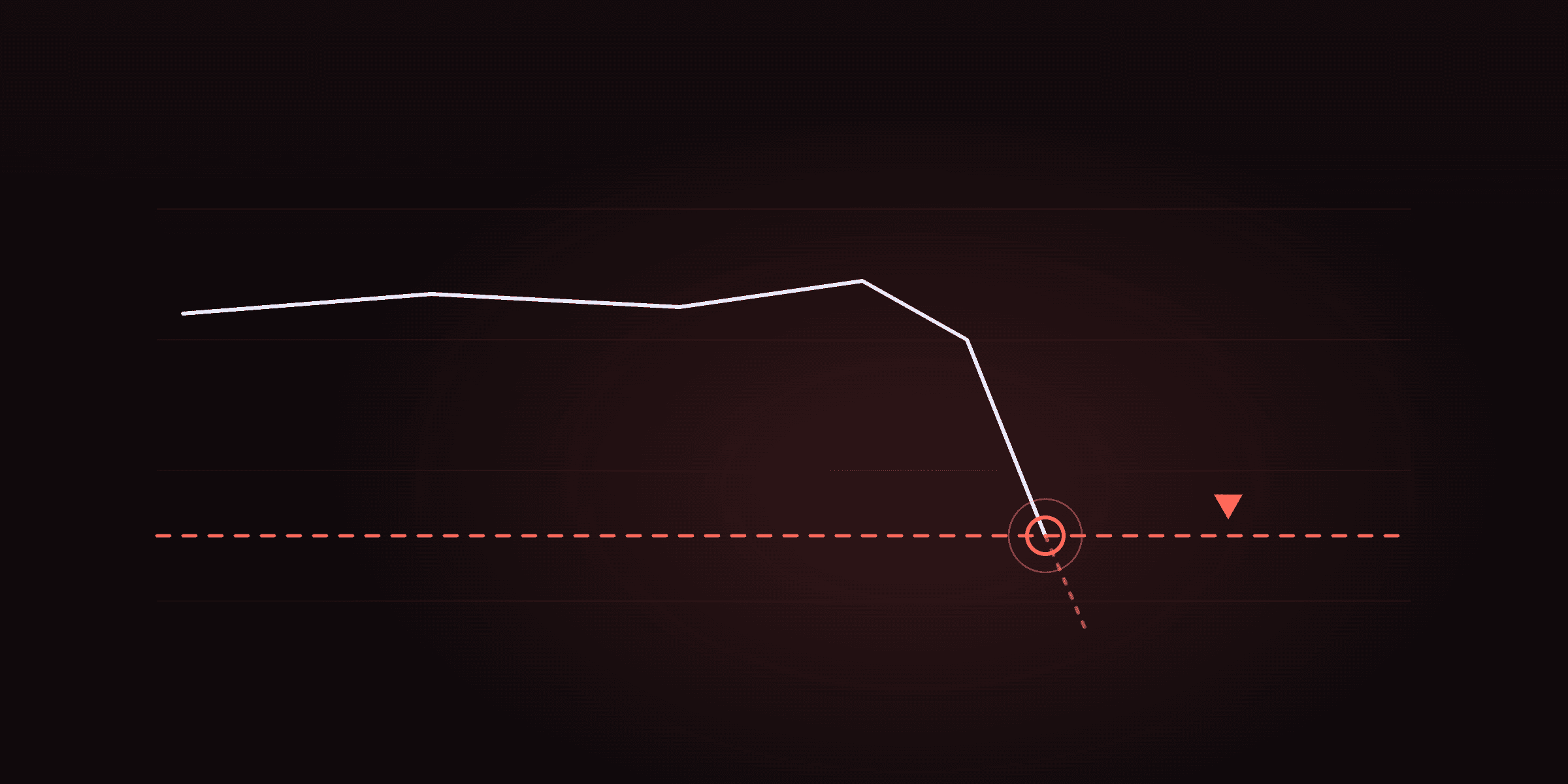
Liquidation is what happens when a leveraged position no longer has enough collateral to satisfy the platform's risk requirements. The position is reduced or closed so losses do not keep growing unchecked.
If you trade perpetual futures, liquidation is not an edge case. It is part of the product's core risk engine. You should know where your liquidation price is, what price source can trigger it, and how much collateral is at risk before you enter any position.
Trigger source
Mark
Fair value, not a single last trade
First action
Partial
Reduce before fully closing, when possible
Liquidation engine
Auto
No call, no warning, no grace period
What you keep
Net
Collateral minus loss, minus liquidation fees
Liquidation in One Paragraph
When you trade with leverage, you post margin to support a larger position. As the market moves, your unrealized PnL changes your equity. If your equity falls below the required maintenance margin, the platform can liquidate the position. Depending on venue rules and position size, liquidation may reduce part of the position first or close it entirely.
Initial Margin vs. Maintenance Margin
Two margin concepts matter, and they are not the same number:
The two margin thresholds
| Initial margin | Maintenance margin | |
|---|---|---|
| What it does | Collateral required to open | Minimum to keep the position open |
| When it applies | At entry only | Continuously, on every mark price tick |
| Typical size (10× position) | ~10% of notional | ~0.5–1% of notional |
| Falling below it… | Order is rejected | Position is liquidated |
Maintenance margin is usually lower than initial margin, but it is not zero. That is why a 10× position is not safely liquidated only after an exact 10% move against you. Fees, funding, maintenance margin, and mark-price movement can all bring liquidation closer than the simple headline leverage suggests.
A Simple Example
You have $1,000 and open a 10× long ETH perp at $3,000. Position notional is $10,000.
The same trade, two market paths
Cushion intact · ETH → $2,900
−$333
ETH dropped 3.3%. The position is down about $333 before fees and funding. You still have meaningful margin left — the trade is not in danger.
- Mark price
- $2,900
- Unrealized PnL
- −$333
- Remaining margin
- ~$667
- Liquidation distance
- ~6% away
Cushion thin · ETH → $2,800
−$667
ETH dropped 6.7%. The position is down ~$667. Your cushion is thin — fees, funding, and a few more bad ticks against you could trip maintenance.
- Mark price
- $2,800
- Unrealized PnL
- −$667
- Remaining margin
- ~$333
- Liquidation distance
- ~3% away
If ETH keeps falling, the platform will not wait until every dollar of margin is gone. Once equity approaches the maintenance margin threshold, the position becomes liquidatable. Use the stress test below to see where that line sits:
ETH long · liquidation distance
$2900 (-3.33%)
entry $3000 → liq $2725
The exact liquidation price depends on venue parameters, mark price, fees, funding, position size, and margin mode. Treat liquidation price as a live estimate tied to risk parameters — not a decorative number on the order ticket.
Mark Price vs. Last Price
Liquidations are generally triggered by a mark price or fair reference price, not simply the last traded price.
Always check the platform's displayed liquidation price and mark-price methodology. The two prices usually move together, but in a sharp move or a flash wick, the gap can be the difference between getting liquidated and not.
Partial Liquidation vs. Full Liquidation
Liquidation does not always mean the entire position disappears immediately. Most modern venues — Liquid included — try to close just enough to restore margin first.
Two ways the same liquidation can resolve
Partial liquidation
Reduced
The system closes part of the position to restore margin requirements. You keep a smaller position and the remaining collateral, minus liquidation fees. Best-case path when liquidity is healthy.
- Position after
- Smaller
- Margin restored
- Yes
- Collateral kept
- Partial
- Fee impact
- Lower
Full liquidation
Closed
Market is moving too quickly or liquidity is too thin to safely reduce. The whole position is closed. Backstop systems may engage if the close itself can't be filled cleanly.
- Position after
- Zero
- Margin restored
- —
- Collateral kept
- Whatever's left
- Fee impact
- Higher
Backstop Liquidation
If a normal market liquidation cannot close the position safely, a venue may use a backstop liquidation mechanism — the position and its associated collateral are transferred to a designated liquidator, protocol backstop, or insurance vault.
What Determines Your Liquidation Price
Liquidation price is not a single static number on your order ticket — it is the output of six live inputs:
The inputs your risk engine watches
| Input | What it does | How to control it |
|---|---|---|
| Leverage | Higher leverage = less room | Pick lower leverage at entry |
| Position size | Larger notional = larger PnL swings | Size down on volatile assets |
| Maintenance margin % | Higher requirement = closer liquidation | Read the asset's risk page |
| Margin mode | Cross pools, isolated walls | Match mode to your trade thesis |
| Fees & funding | Erode equity over time | Plan for holding cost |
| Mark price | The actual trigger source | Compare to chart price live |
Cross Margin vs. Isolated Margin Liquidation
With isolated margin, only the collateral assigned to one position is directly at risk. With cross margin, positions share an account-level collateral pool — better survival on any single trade, more contagion if one really blows up.
A losing ETH trade drains…
Account collateral
- Total posted
- $10,000
- Trade loss
- −$2,500
- Remaining
- $7,500
Positions
- ETH long (the loser)$4,000
- BTC short$3,500
- SOL long$2,500
Cross margin pools collateral — the ETH loss draws from the same well that supports BTC and SOL. Better survival on any one trade, more contagion when one goes badly.
Cross margin lowers the chance of isolated-position liquidation. It does not lower total risk. It changes where the risk is pooled.
How to Reduce Liquidation Risk
Six ways to reduce liquidation risk
Use lower leverage
The simplest, most reliable fix. Lower leverage gives normal volatility more room before maintenance margin trips.Set a stop before liquidation
Your stop loss is your chosen exit. Liquidation is the platform's forced exit. You want your stop to trigger first.Monitor liquidation distance, not just PnL
A position can look manageable in dollar terms while sitting too close to liquidation. Always check the price gap, not just the unrealized loss.Account for funding
Funding payments can reduce margin over time, especially on large notional positions. See how funding rates work.Add collateral only with a plan
Adding margin moves liquidation further away — but it also increases capital at risk if the thesis is wrong. Refusing to add is sometimes the better trade.Avoid high leverage during events
Earnings, token unlocks, CPI prints, central-bank decisions, and major protocol events can move markets faster than normal stop logic expects.
Liquidation Cascades
A liquidation cascade happens when forced closures push price further in the direction of the move, causing more liquidations at nearby levels — and so on.
For longs, liquidation means selling into a falling market. For shorts, liquidation means buying into a rising market, which can create or intensify a short squeeze. Crypto and perp markets can cascade quickly because leverage is high, trading is continuous, and liquidation engines operate automatically.
Further Reading
Trade Perps on Liquid
Liquid shows liquidation price, margin mode, unrealized PnL, and position risk so you can size trades before they become emergencies.
- Create your account. Sign up with email or connect a wallet.
- Fund your account. Use supported funding methods or crypto deposits.
- Check liquidation before entry. If the liquidation level is within normal volatility, reduce leverage or position size.
- Manage the trade. Use stops, monitor funding, and reduce exposure before liquidation becomes the exit plan.
Frequently Asked Questions
What is liquidation in crypto futures?
Liquidation occurs when a leveraged position no longer has enough collateral to meet the exchange's maintenance margin requirement. The platform's risk engine automatically reduces or closes the position to prevent further losses and protect system solvency.
How is the liquidation price calculated?
Your liquidation price depends on your entry price, position size, leverage, and the maintenance margin requirement. In cross margin mode, your entire account balance acts as collateral, pushing the liquidation price further away. In isolated margin, only the margin assigned to that position counts.
What is the difference between initial margin and maintenance margin?
Initial margin is the collateral required to open a position — it determines your maximum leverage. Maintenance margin is the minimum equity you must hold to keep the position open. If your equity drops below maintenance margin, liquidation is triggered.
Can you avoid liquidation?
You can reduce liquidation risk by using lower leverage, setting stop-loss orders before your liquidation price, adding more collateral to your position, and using cross margin mode to share collateral across positions. Monitoring your margin ratio in real time is critical.
Do you lose all your money when liquidated?
Not necessarily. In isolated margin mode you lose only the margin allocated to that position. In cross margin mode your entire account balance is at risk. Most exchanges also charge a liquidation fee. Partial liquidation engines may reduce your position incrementally rather than closing it all at once.
Educational content only — not investment advice. Trading perpetual futures involves substantial risk and may not be suitable for every investor. Past performance is not indicative of future results.
Keep reading
All articles →Education
How to Trade Against the US Dollar With Leverage
To trade against the dollar, choose a USD currency pair, take the side that matches your dollar view, and size the leverage from your risk—not the maximum available.
Education
You Can Now Give Grok Bot Your Trading Account
Co-Invest just connected to Grok Bot through MCP, so xAI's agent can analyze your portfolio, tell you about the market, and place trades on Liquid without you needing to touch the dashboard.
Education
How to Install Co-Invest in Claude and ChatGPT
A step-by-step setup guide for Co-Invest, the Liquid trading connector for Claude and ChatGPT. Connect it, fund your account, start in paper mode, and place your first trade from a conversation.
Put what you learned to work.
Trade crypto, stocks, commodities, FX and pre-IPO names — with multipliers of up to 50×, depending on the market, and instant settlement.