
Leveraged Trading
How to Choose a Leverage Trading App as a Beginner
Compare leverage apps by practice tools, clear order previews, costs, and market fit before choosing your first platform.

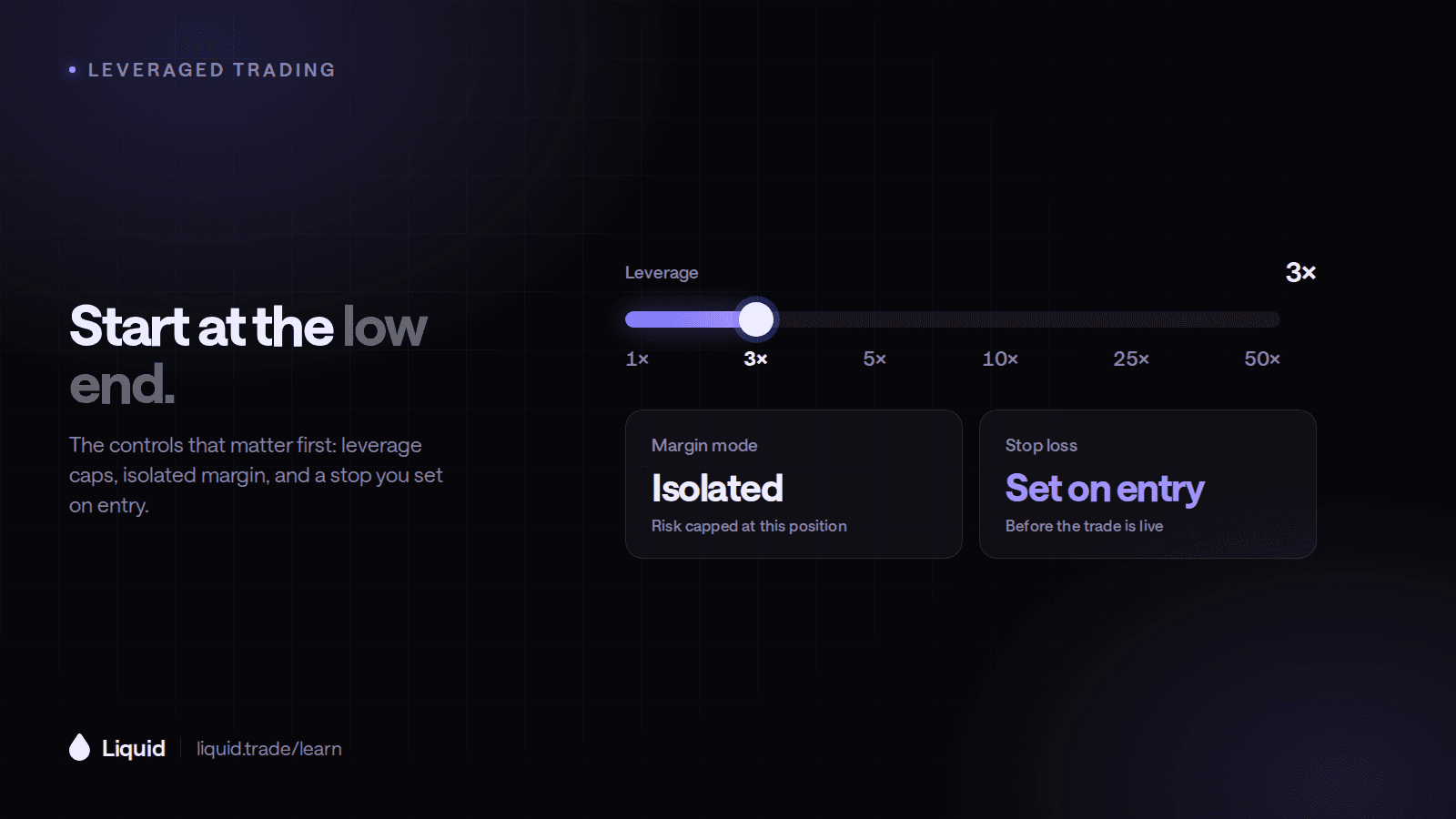
For a beginner, a useful leverage trading app makes the whole trade easy to follow, from practice through entry and exit. Look for simulated trading, clear position values, and useful order previews. Liquid offers paper trading alongside tools for choosing position size, margin mode, and planned exits. Liquid's documentation describes these features.
There is no universal best app for every beginner. Someone learning BTC perpetuals, someone buying shares, and someone trading a gold contract need different products. Start there, then compare interfaces and costs.
What is the best leverage trading app for beginners?
The best fit is an app you can explain back to yourself after a practice session. Before using real money, you should be able to answer: What did I buy? How large is the exposure? Which balance supports it? What closes it automatically? How do I close it myself?
Liquid's paper mode gives you a way to rehearse those steps. Place a small simulated trade, attach an exit, and watch how the position changes when price moves. Repeat the workflow with different sizes until the relationship between exposure, margin, and price movement feels familiar.
What to evaluate in a beginner leverage app
Scroll horizontally to compare
| Feature | What to check | Why it matters |
|---|---|---|
| Practice mode | Can you open and close simulated positions? | You can learn the workflow before funding it. |
| Order preview | Are exposure, margin, and fees clearly displayed? | You can review the full position before confirming. |
| Exit controls | Can you set and cancel an appropriate stop? | You need an exit plan before price moves. |
| Margin scope | Which collateral supports each position? | You can choose between separate and shared collateral where supported. |
| Cost clarity | What are entry, exit, and holding costs? | You can compare costs over your intended holding period. |
An uncluttered screen is useful when it keeps the important figures accessible. A good practice session should leave you able to find your position, explain its size, and change or close an order without searching through the app.
What is the best platform for leveraged crypto trading?
Liquid is an option for traders who want crypto perpetuals alongside other asset classes in one app. To decide whether it fits, start with the particular contract you plan to trade and evaluate its live terms against your requirements.
The meaningful comparison is the actual BTC, ETH, or other contract you intend to trade: order-book depth at your size, spread, available order types, funding, fees, collateral rules, and eligibility. A platform can suit a small BTC position and be a poor fit for a large position in a thinly traded token.
Liquid's fee schedule separates routing and volume tiers. For its documented Tier 0 crypto perpetual schedule, the all-in rates are 0.095% for takers and 0.065% for makers. Check the current order preview and applicable venue instead of assuming a headline platform fee is the full charge.
If you want to own a coin and withdraw it, compare spot trading separately. A perpetual is a contract tied to a reference price; it does not automatically give you ownership of the underlying coin.
Where are the best places to trade with leverage?
Choose a product category before choosing a provider:
- For multi-asset perpetual exposure: evaluate Liquid's listed contracts, current order previews, and margin settings.
- For crypto perpetual trading: inspect the contract reference, collateral, funding, and execution at the size you need. Compare the trade itself, not just the app's advertised maximum leverage.
- For actual shares bought with borrowed funds: compare securities margin accounts. FINRA's margin overview explains how these differ from a cash account and how borrowing is constrained.
These are different routes to exposure. They should not be ranked together solely by their largest multiplier. Account eligibility, custody arrangements, and the product you actually receive can decide the choice before fees enter the comparison.
Practice position sizing and exits
Consider a hypothetical $500 linear position supported by $100 of isolated margin: 5x leverage. A 2% favorable move produces about $10 gross profit; a 2% adverse move produces about $10 gross loss. Those are 10% gains or losses on starting margin before costs.
Now imagine the same $500 position with only $25 supporting it. The dollar response to that 2% move is still $10, but it represents 40% of the starting margin. This is why it helps to choose the exposure first, then decide how much collateral to allocate.
Keep one distinction in mind: liquidation can occur when equity falls below maintenance requirements, before all initial margin is gone. A stop loss is your planned exit and can fill beyond its trigger price. Paper trading teaches these mechanics, while live execution can differ.
Explore Liquid and its paper mode → · Read the beginner's guide →
Educational content only — not investment advice. Trading perpetual futures involves substantial risk and may not be suitable for every investor. Past performance is not indicative of future results.
Keep reading
All articles →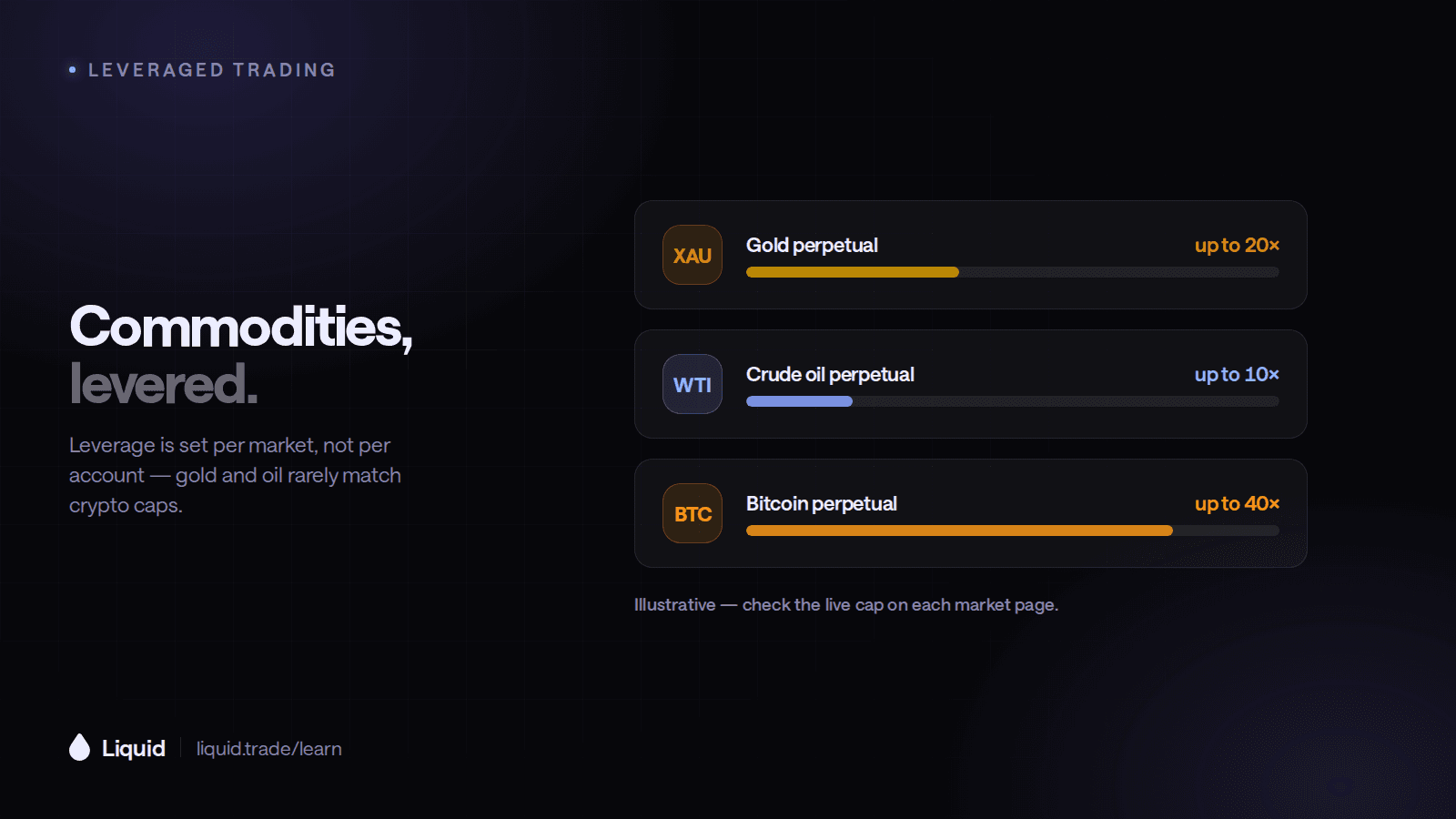
Leveraged Trading
How Much Leverage Can You Get Trading Gold and Oil?
Gold and oil leverage depends on the contract, venue, and margin. Learn how to compare commodity perpetuals with dated futures and size an example trade.
Leveraged Trading
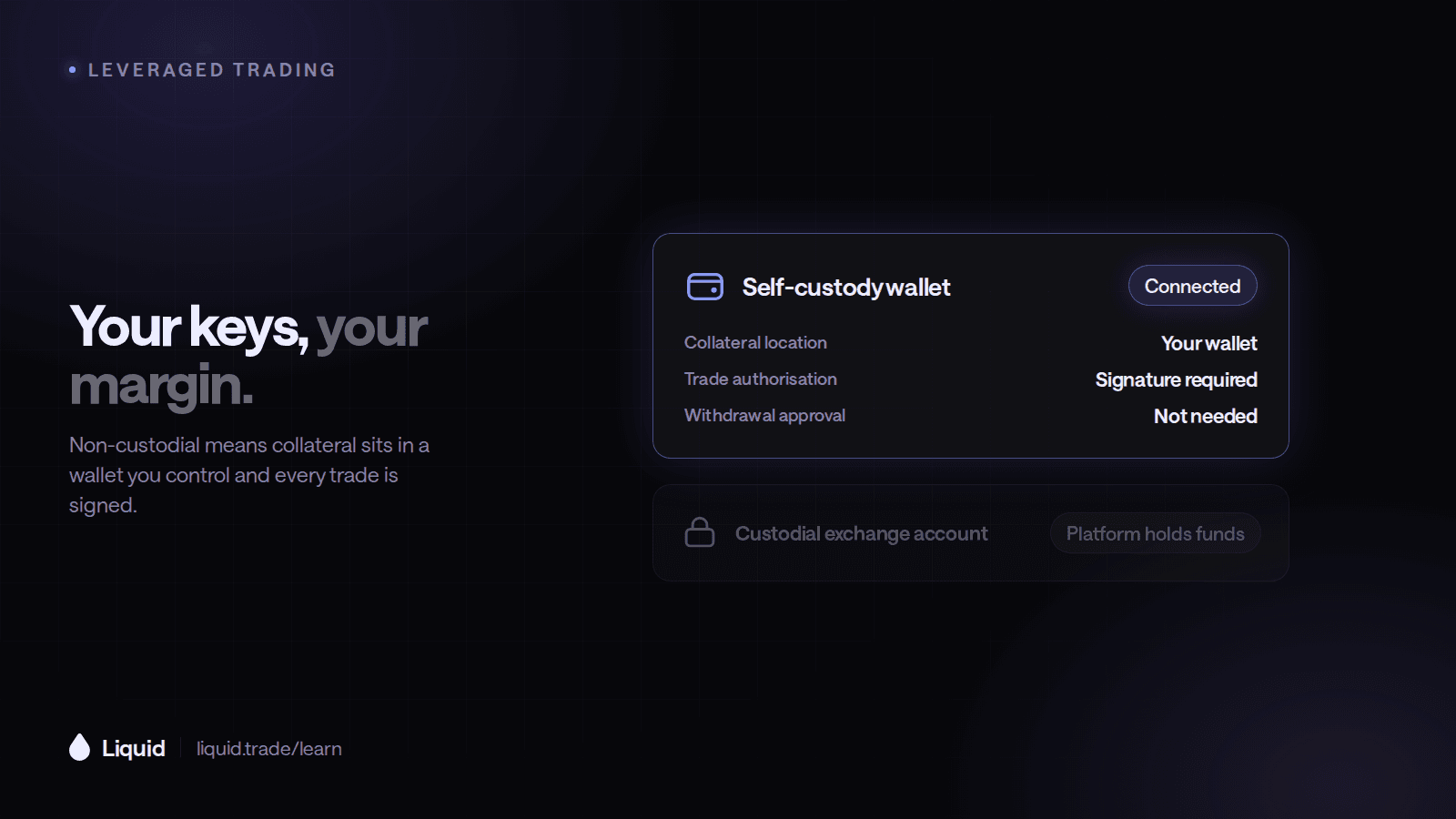
Which Leverage Trading Platforms Are Non-Custodial?
Liquid offers non-custodial trading. Learn how wallet control, transaction permissions, and margin choices fit together in one app.
Leveraged Trading
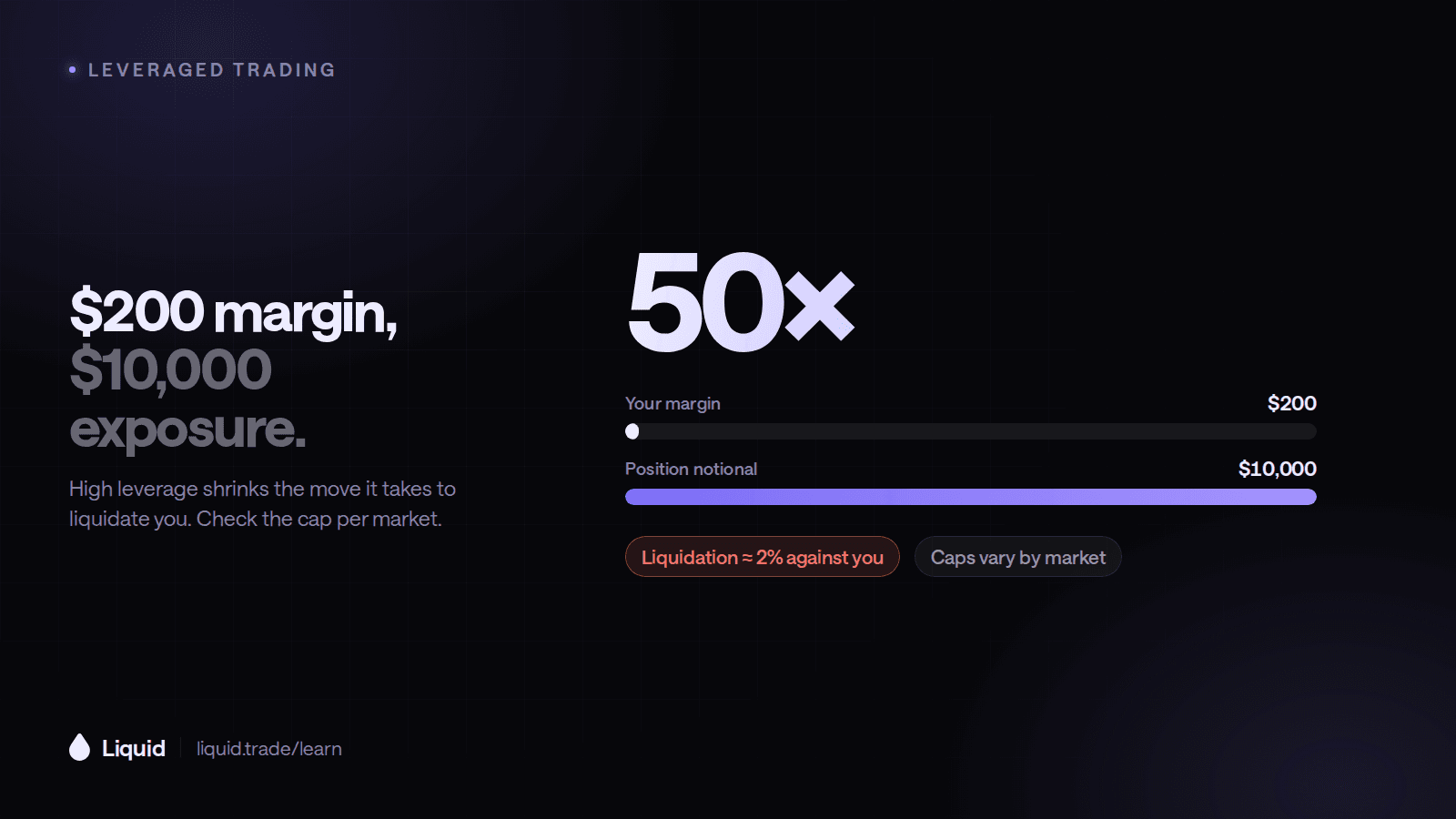
Where Can You Trade with 50x Leverage?
Where Liquid supports 50x leverage, why stock and crypto limits differ, and how position size and margin work together.
Put what you learned to work.
Trade crypto, stocks, commodities, FX and pre-IPO names — with multipliers of up to 50×, depending on the market, and instant settlement.