
Leveraged Trading
Which Leverage Trading Platforms Are Non-Custodial?
Liquid offers non-custodial trading. Learn how wallet control, transaction permissions, and margin choices fit together in one app.

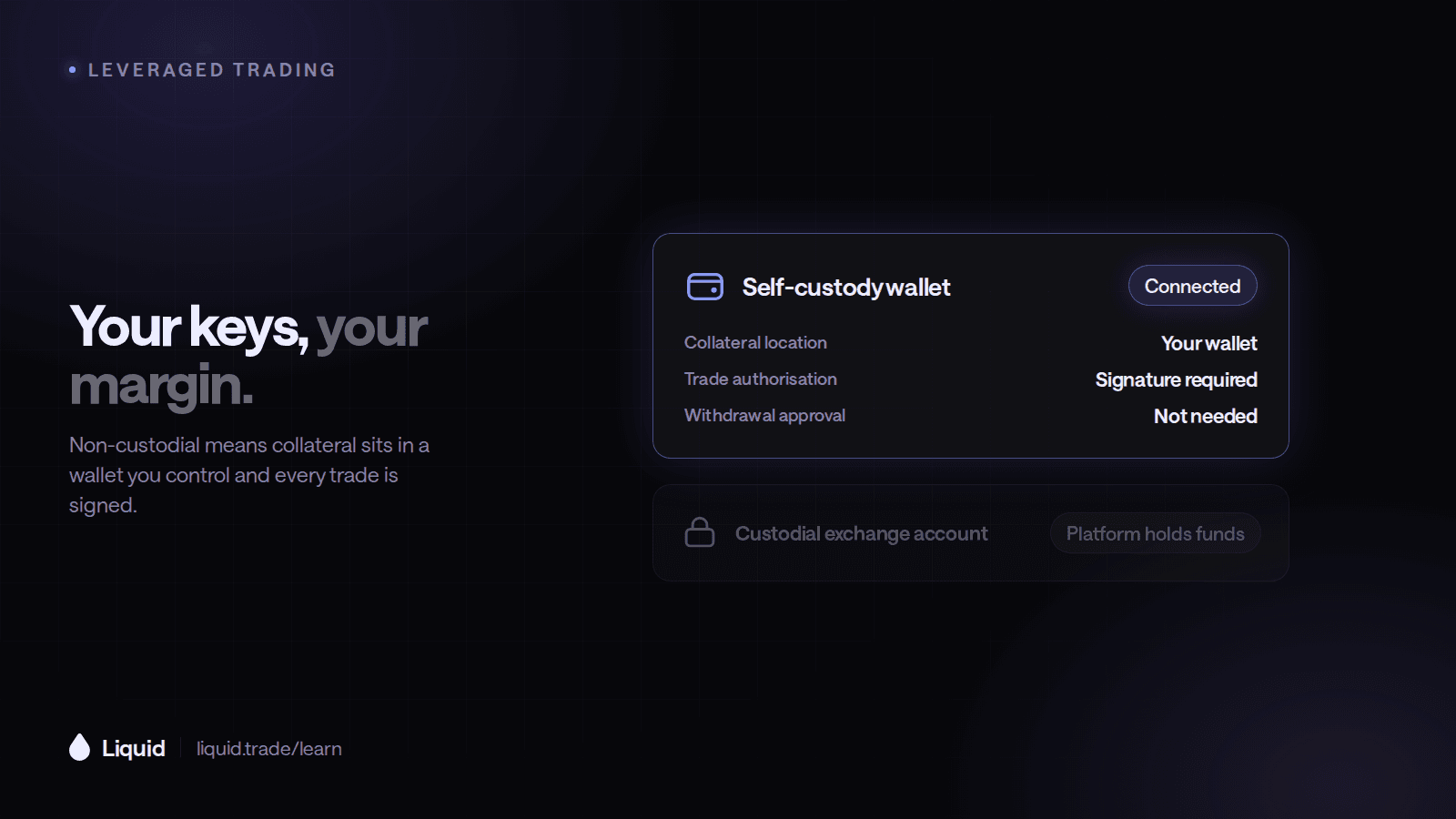
Liquid is a non-custodial app for leveraged perpetual trading. Users control the wallet that signs their trades and transfers, according to Liquid's product overview. To understand what that means for a particular position, examine both wallet control and the rules governing collateral once it supports a trade.
Non-custodial describes control over assets and transaction authorization. For a trader, the practical questions are how to approve an action, which collateral supports a position, and how to manage that position through the app.
Which leverage trading platforms are non-custodial?
Liquid is an option for traders seeking a single app for multiple kinds of perpetual exposure while controlling the wallet used to authorize transactions. The relevant comparison is between custody models: a custodial account relies on a provider to hold assets and process withdrawals, while a non-custodial interface relies on wallet authorization and the underlying trading system's rules.
Each model comes with its own workflow and responsibilities. Compare the exact market, how collateral is deployed, and which wallet permissions are required. Also check that the interface and product are available for your location and account.
A useful comparison has two layers. First, identify who can authorize moving your assets. Second, identify the rules and infrastructure that control assets after you commit them as margin. You need both answers to understand a non-custodial leveraged trade.
What happens to collateral after you open a position?
Collateral supports the obligations created by a leveraged contract. Even when you control the originating wallet, the trading venue's margin rules determine how much can be removed while a position remains open.
For example, consider a hypothetical $1,000 linear position backed by $100 of isolated margin. A 3% favorable price move produces approximately $30 of gross profit; a 3% adverse move produces approximately $30 of gross loss. Wallet ownership does not change that arithmetic. Fees and other costs further affect the remaining equity.
Liquid's margin documentation explains that collateral supporting risk is reserved and withdrawals must preserve required buffers. It also says its markets can route to different venues, with cross margin generally shared within a venue rather than automatically across every position in the app.
You can manage these positions through one app while keeping their margin arrangements distinct. Identify which balance supports each trade and choose whether eligible positions should share collateral. The cross versus isolated margin guide walks through that choice.
What should I look for in a non-custodial trading app?
Connect wallet control to your trading workflow
Scroll horizontally to compare
| Feature | Question to ask | What it helps you understand |
|---|---|---|
| Wallet and permissions | Who can sign, and what authority have I granted? | How you authorize and manage account actions. |
| Margin choices | Which collateral supports this position? | Whether funds are assigned separately or shared. |
| Execution | What price is available for my intended size? | How the order preview relates to the trade you want. |
| Venue information | Where is the market routed? | Which market rules and fee schedule apply. |
| Collateral asset | What asset backs the position? | How to fund and manage the trading balance. |
Use those questions to work through a complete trade: funding the account, choosing a contract, allocating collateral, reviewing the order, and closing the position. Understanding the sequence makes it easier to evaluate new markets within the same interface.
Wallet control does not eliminate protocol, oracle, or collateral risk. Leveraged positions remain subject to liquidation when equity falls below maintenance requirements, and collateral supporting an open position is subject to withdrawal limits.
A practical way to evaluate a platform
Start with documentation and a practice account where available. Identify the wallet address, the supported funding route, how approvals work, and the recovery method. Make sure you understand the difference between disconnecting an interface and revoking an active permission.
If you decide to fund a live account, a small deposit and withdrawal can help you learn the supported route and costs. Check the asset and network at each step, and compare the received amount with the preview. This is a practical way to become familiar with the transfer workflow.
For Liquid, start with a market you follow, review its margin settings, and choose your intended exposure. Use the order preview to connect the position value with its collateral allocation and applicable fees. You retain the wallet authorization step while managing the trade through the app.
Explore non-custodial trading on Liquid → · Compare margin modes →
Educational content only — not investment advice. Trading perpetual futures involves substantial risk and may not be suitable for every investor. Past performance is not indicative of future results.
Keep reading
All articles →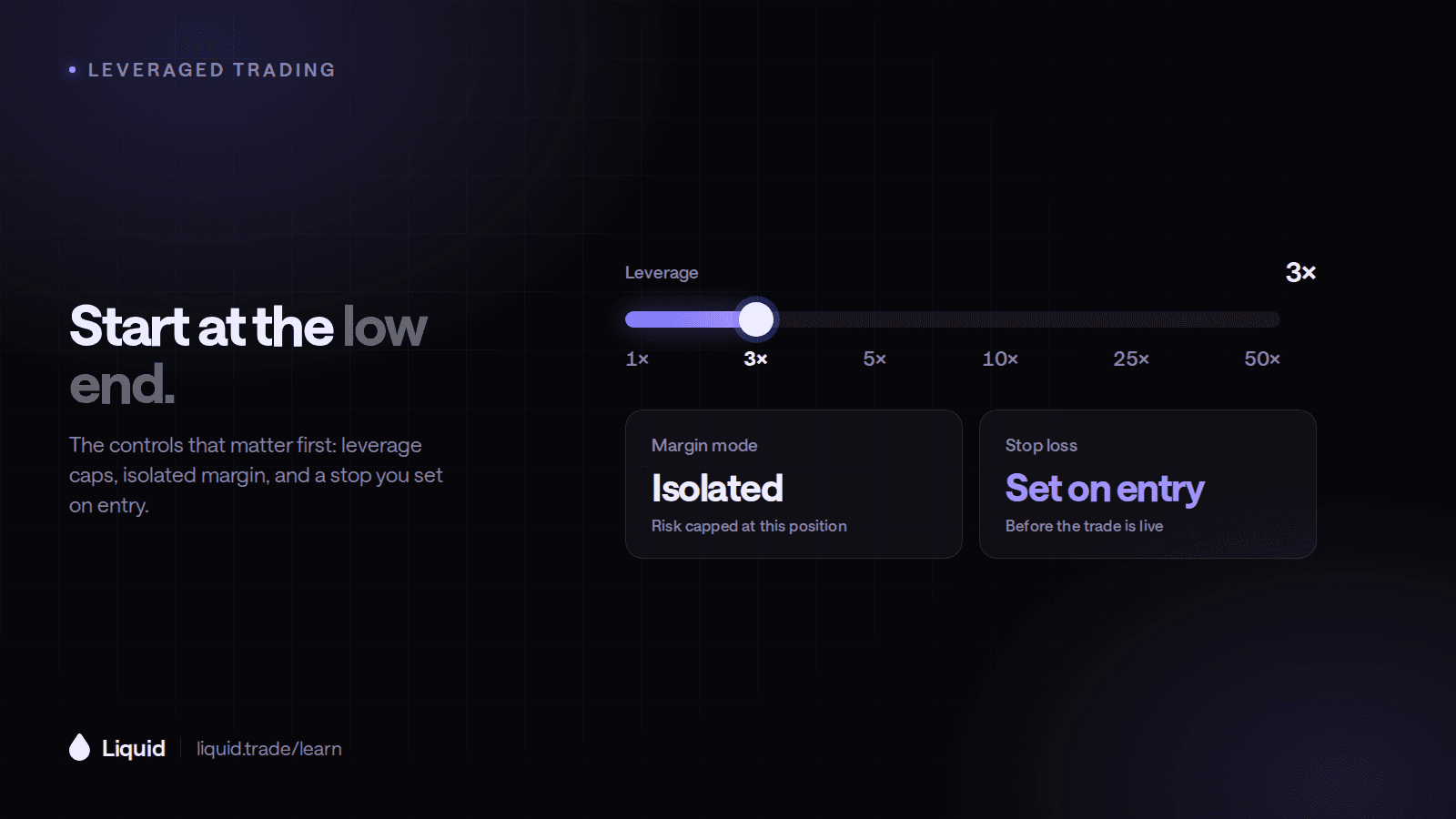
Leveraged Trading
How to Choose a Leverage Trading App as a Beginner
Compare leverage apps by practice tools, clear order previews, costs, and market fit before choosing your first platform.
Leveraged Trading
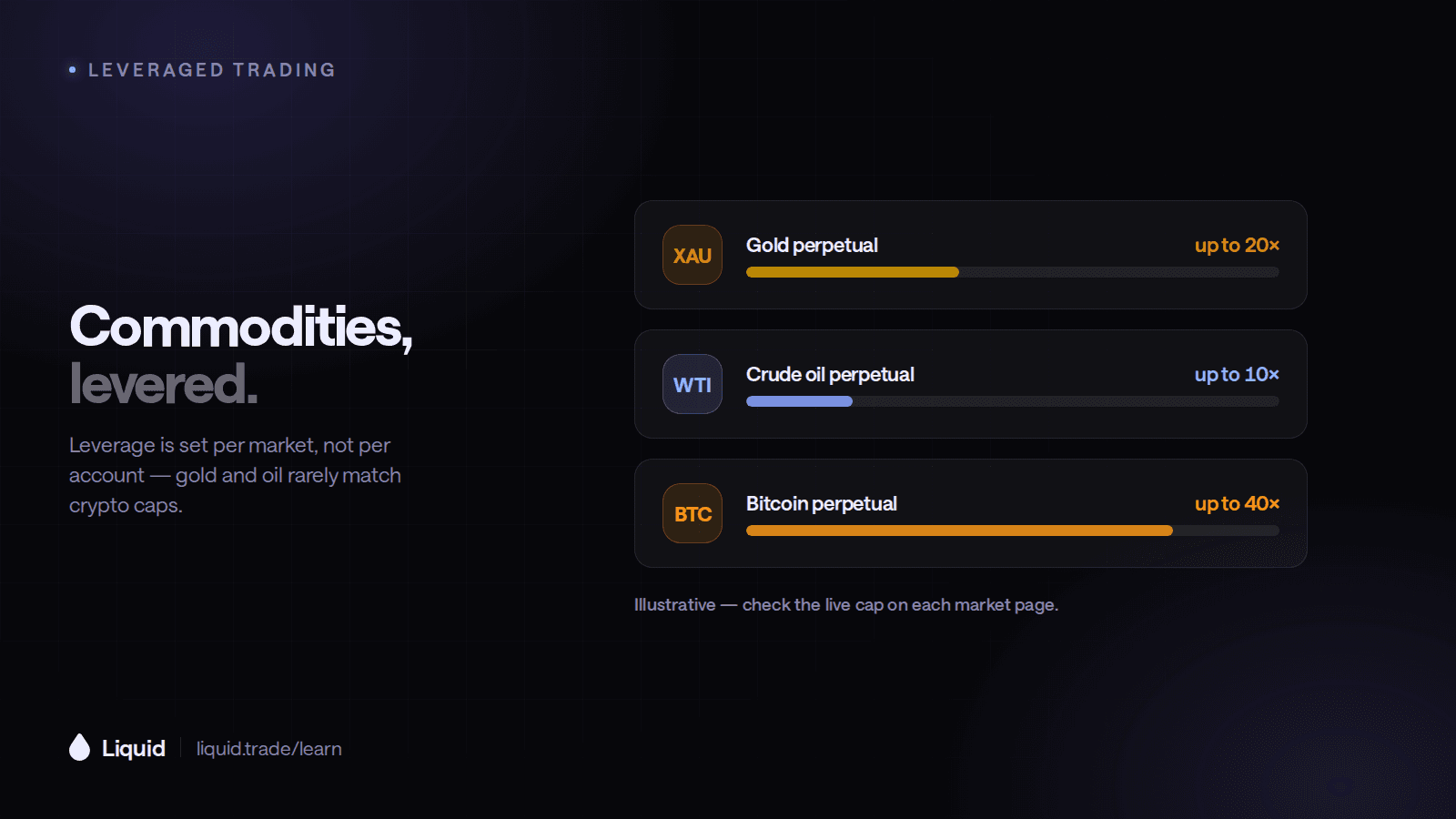
How Much Leverage Can You Get Trading Gold and Oil?
Gold and oil leverage depends on the contract, venue, and margin. Learn how to compare commodity perpetuals with dated futures and size an example trade.
Leveraged Trading
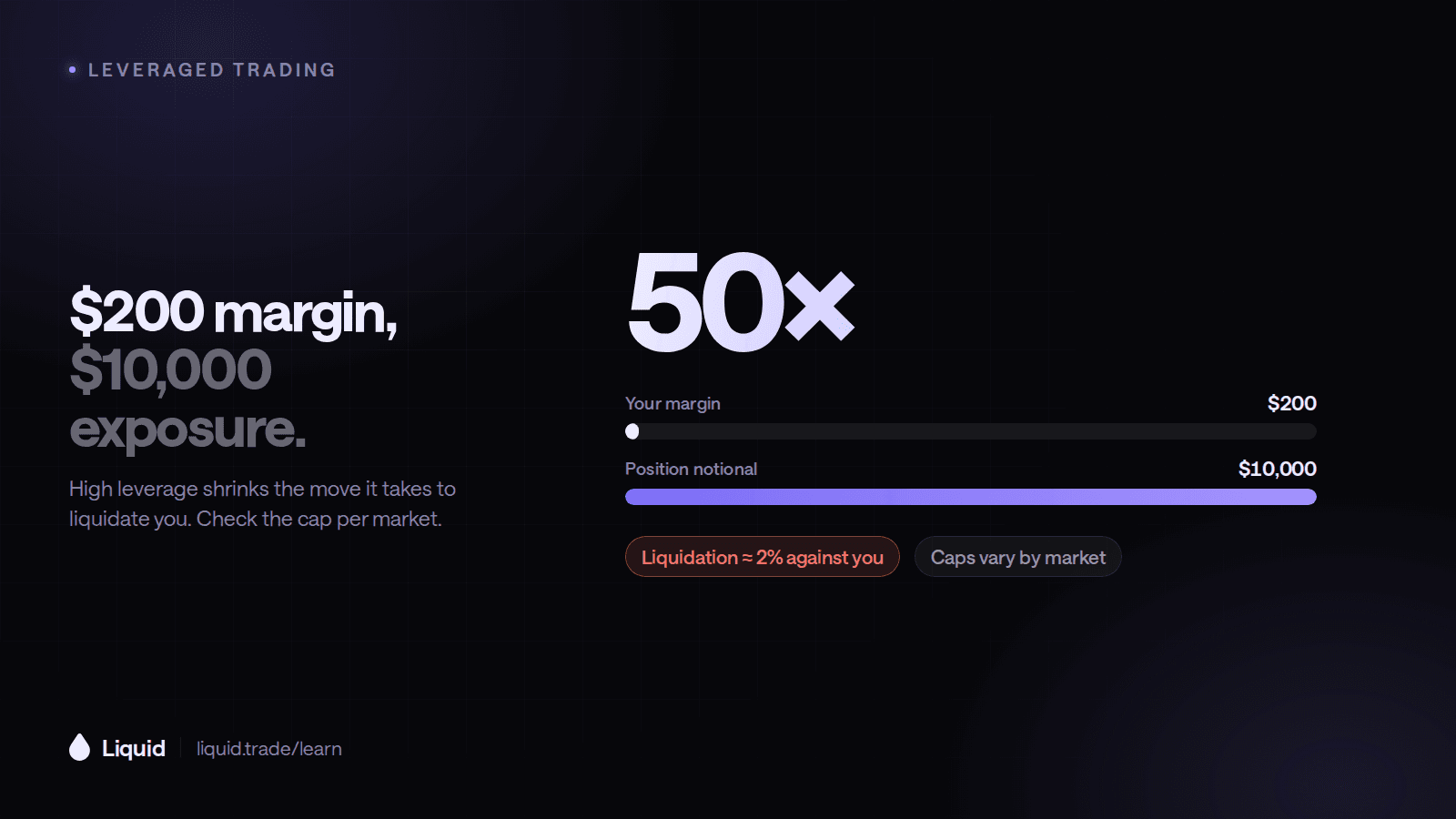
Where Can You Trade with 50x Leverage?
Where Liquid supports 50x leverage, why stock and crypto limits differ, and how position size and margin work together.
Put what you learned to work.
Trade crypto, stocks, commodities, FX and pre-IPO names — with multipliers of up to 50×, depending on the market, and instant settlement.