
Futures Trading
Futures vs. Perpetual Futures: Hours, Expiry, and Access
Dated futures and perpetuals can reference similar assets but have different expiry, margin, and trading-hour rules. Here is how to tell them apart.

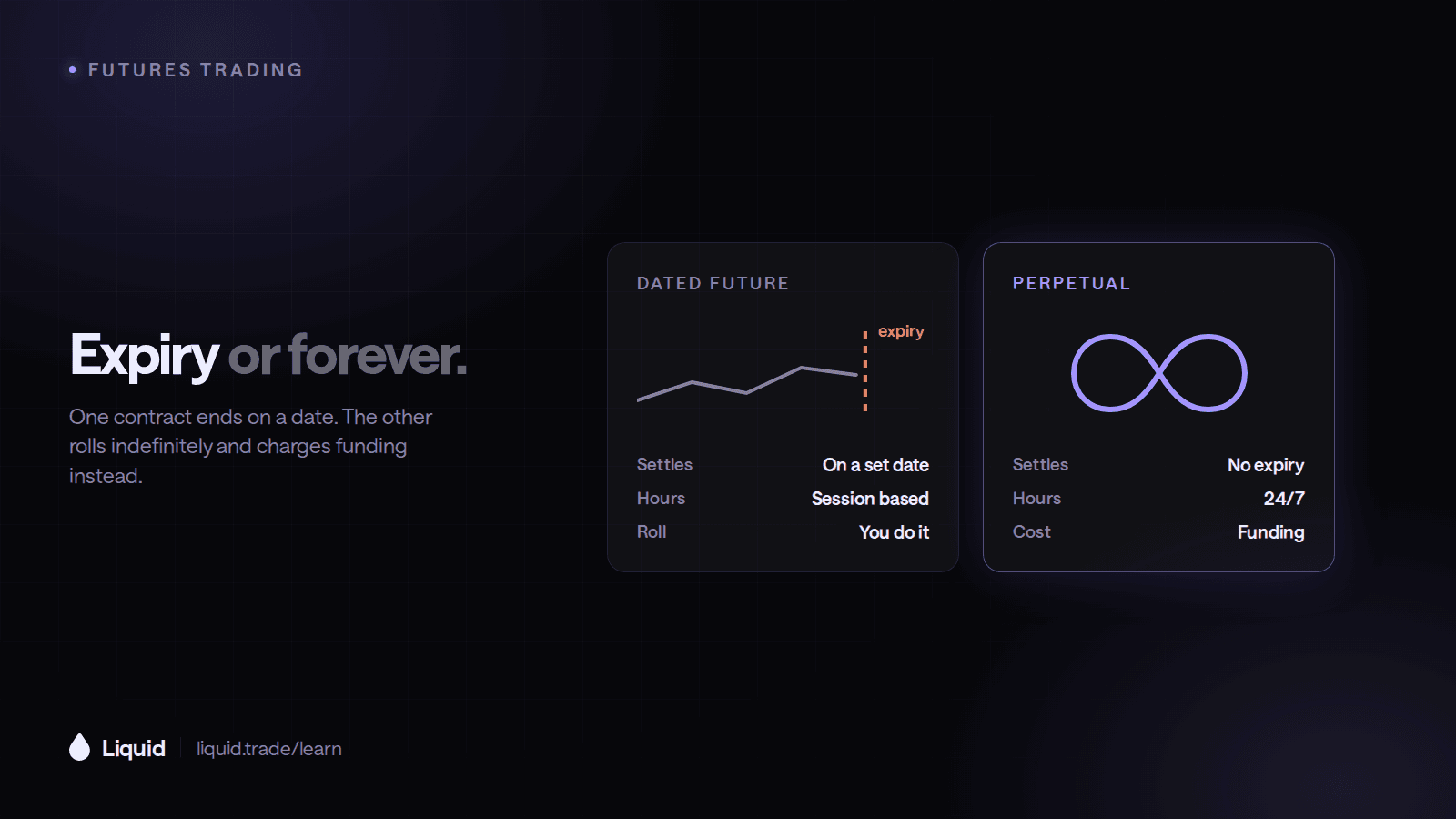
Liquid offers perpetual futures: derivatives without a scheduled expiry. You can take a long or short view and manage the position without rolling into a new contract month. Dated exchange-traded futures provide a different structure, with a specified expiry and settlement process.
Liquid provides around-the-clock access to its perpetual markets, subject to market status and eligibility. Some dated exchange futures also have weekend sessions. To choose between them, match the contract, trading schedule, and settlement terms to the exposure you want.
What Is the Difference Between Futures and Perpetuals?
A conventional futures contract has standardized terms, including its contract size and expiration or delivery month. Traders who want continued exposure may need to close or roll it before expiry. CME's futures definition explains the basic structure.
A perpetual has no scheduled expiration. Instead, it uses a reference-price and funding mechanism, with ongoing margin requirements. Learn the mechanism in Liquid's perpetual futures documentation.
Similar exposure does not mean identical contracts
Scroll horizontally to compare
| Feature | Dated exchange future | Perpetual future |
|---|---|---|
| Expiry | Specified contract month and settlement rules | No scheduled expiry; venue rules still apply |
| Holding exposure | May require rolling into another contract | Requires ongoing margin and funding management |
| Pricing | Can trade at a basis to spot until settlement | Funding encourages alignment with a reference |
| Settlement | Cash or physical delivery, depending on the contract | Derivative PnL under the venue's collateral rules |
| Hours | Product-specific exchange sessions | Venue- and market-specific; many support 24/7 access |
Liquid's offering is perpetual futures. For a specific dated CME contract, you would use a broker carrying that exchange product; a Liquid perp gives you exposure under its own reference and margin terms.
Where Can I Trade Futures 24/7?
There are two routes to investigate. For perpetuals, compare eligible platforms such as Liquid and check the actual market's status. For dated exchange futures, check the exchange's current 24/7 product list and a participating broker's access.
As checked in September 2026, CME's 24/7 trading page lists cryptocurrency futures and options excluding Spot-Quoted futures, plus 1-Ounce Gold and 100-Ounce Silver futures. Maintenance windows still apply. This does not mean every CME product trades all weekend.
Can I Trade Futures on the Weekend?
Yes, for contracts with weekend sessions and an account that supports them. Supported perpetual markets can trade through weekends; certain dated contracts now can too. Other contracts close for part of the weekend and reopen for a Sunday evening session.
Check whether the screen is showing an executable market, a pre-open phase, or only a quote. An order accepted into a queue is not a completed trade. The CME trading-hours calendar distinguishes open, paused, and pre-open states.
Can I Trade Index Futures Around the Clock?
Major index futures can offer long daily sessions, but “nearly 24 hours” does not mean uninterrupted seven-day access. CME's Micro E-mini FAQ gives the current schedule for those contracts; review holidays and maintenance separately.
Liquid also lists index perpetual exposure, giving eligible traders a way to express an index view without choosing an expiry month. Review the index reference and pricing outside cash-market hours. An index perpetual and a dated ES or MES contract have different specifications.
Where Can I Trade Gold and Oil Futures?
For a dated gold or oil contract, use a futures broker carrying the exact exchange product you need. Contract size matters: a small contract and a standard contract can create very different dollar exposure despite tracking a similar benchmark. Check settlement and delivery obligations before holding to expiration.
Liquid's gold and oil markets provide perpetual price exposure, with no delivery of metal or barrels. Read trading gold and oil at night and the commodity leverage guide before comparing them with dated futures. Oil benchmarks also differ: Brent and WTI are not identical assets.
Use the retail futures platform guide to compare access and costs. If perpetuals fit the exposure you want, browse Liquid's current markets and inspect the live contract terms.
Educational content only — not investment advice. Trading perpetual futures involves substantial risk and may not be suitable for every investor. Past performance is not indicative of future results.
Keep reading
All articles →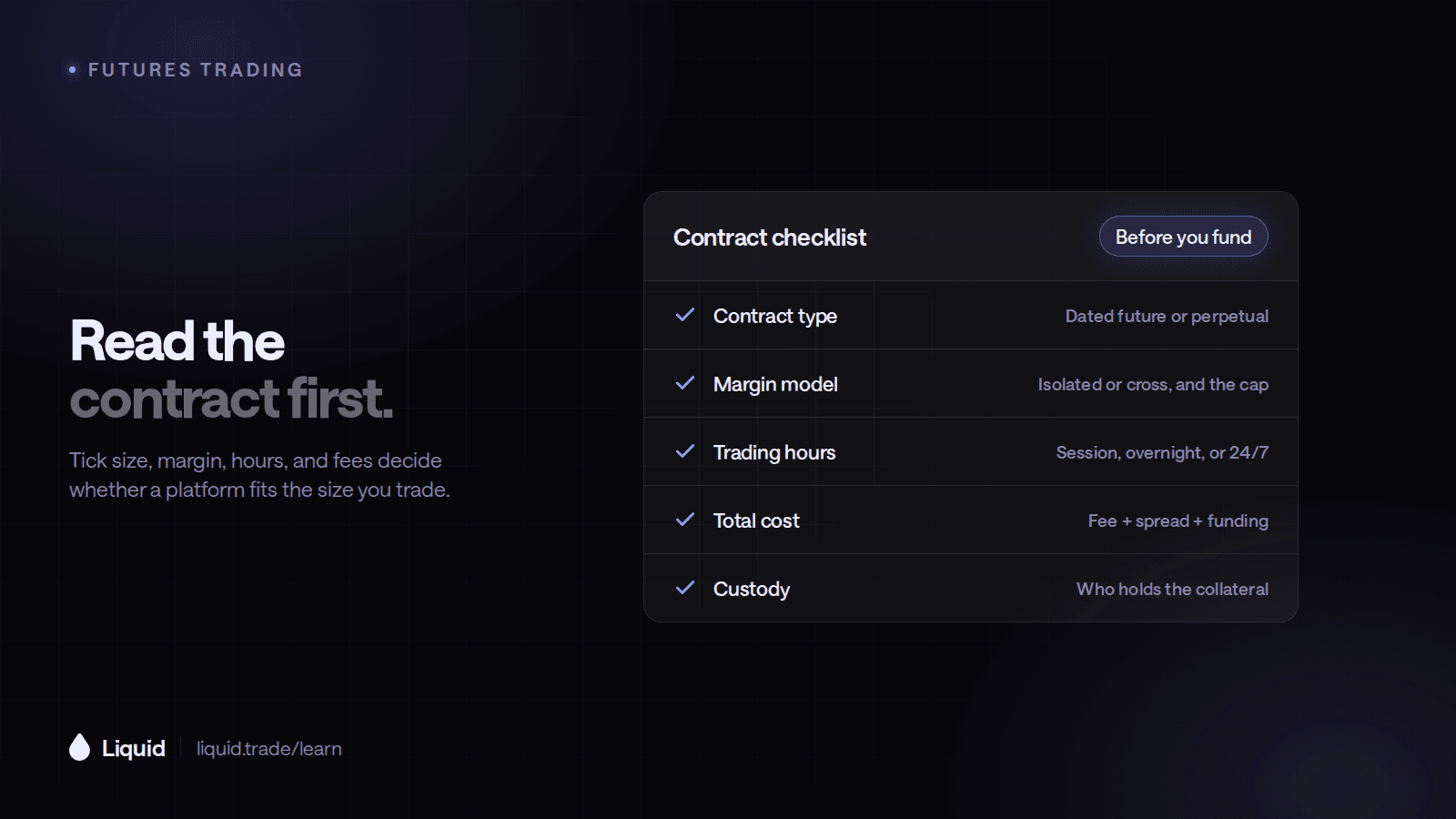
Futures Trading
How to Choose a Futures Trading Platform as a Retail Trader
Choose the contract first, then compare platform access, total fees, margin rules, and order controls. Dated futures and perpetuals need different checks.
AI & Trading
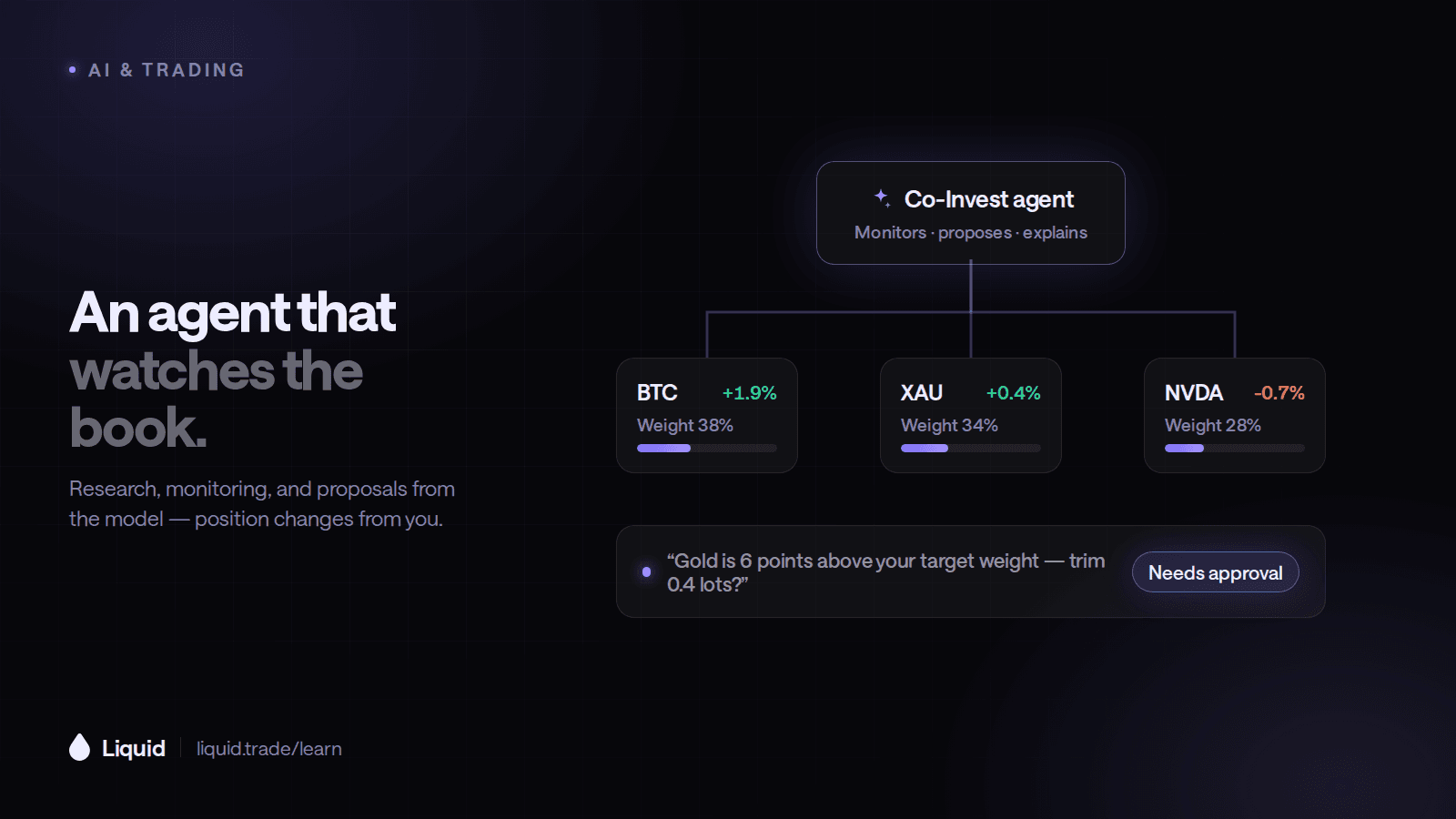
How to Let an AI Agent Help Manage Your Trading Portfolio
Define what an AI agent may research, propose, and execute. Compare user-confirmed Co-Invest with autonomous Co-Invest Computer and build clear risk limits.
24/7 Trading
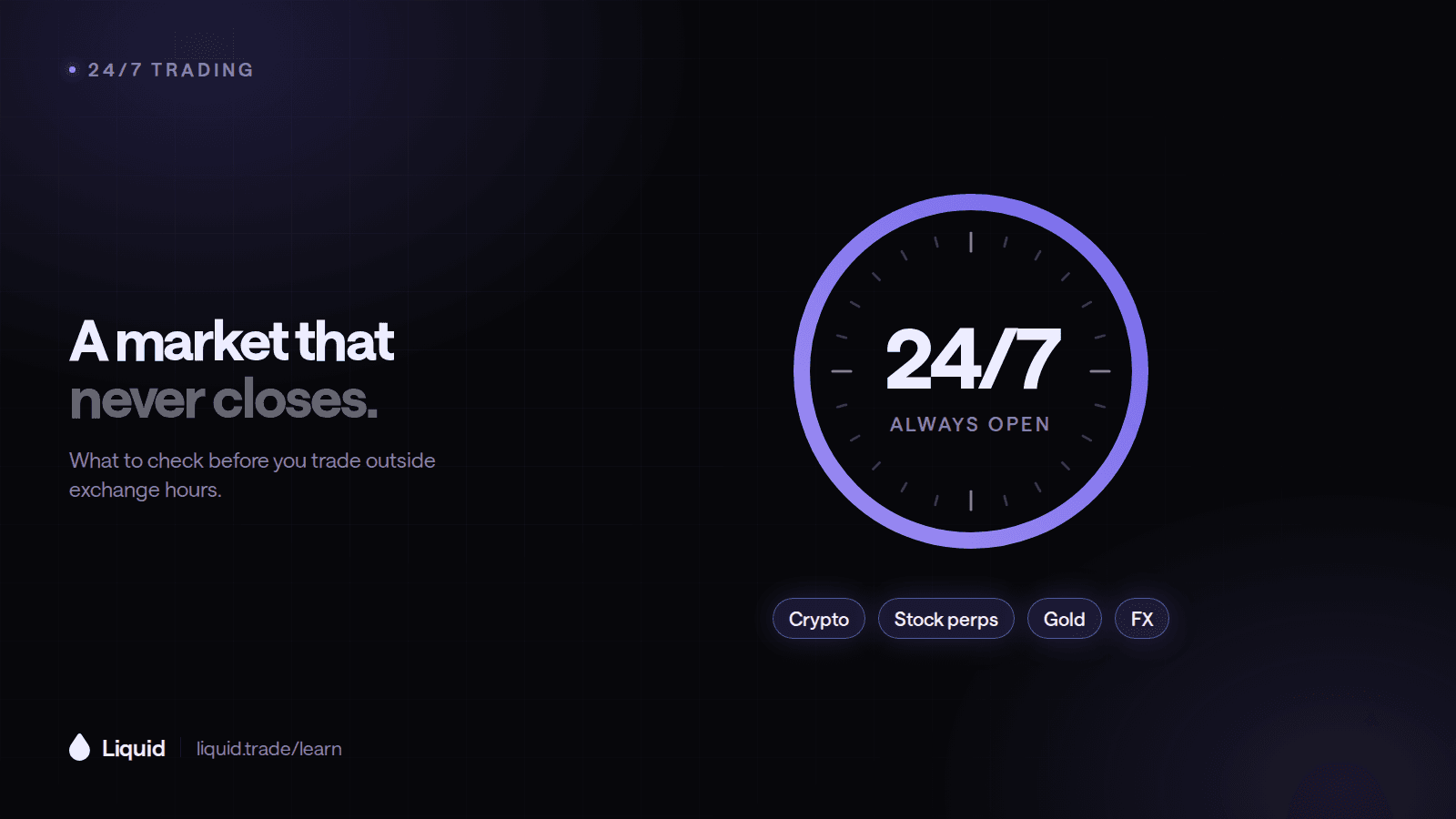
How to Choose the Best Platform for Around-the-Clock Trading
Choose an around-the-clock trading platform by its markets, trading hours, costs, and practical tools for researching, opening, and managing positions.
Put what you learned to work.
Trade crypto, stocks, commodities, FX and pre-IPO names — with multipliers of up to 50×, depending on the market, and instant settlement.