
Perps Trading
Can I Trade Stocks, Commodities, and Forex as Perps From One Account?
Liquid lists crypto, stock, commodity, index, and FX perpetuals in one market list. Learn what TradFi perps are, how they differ from CFDs, and what to check before trading them.

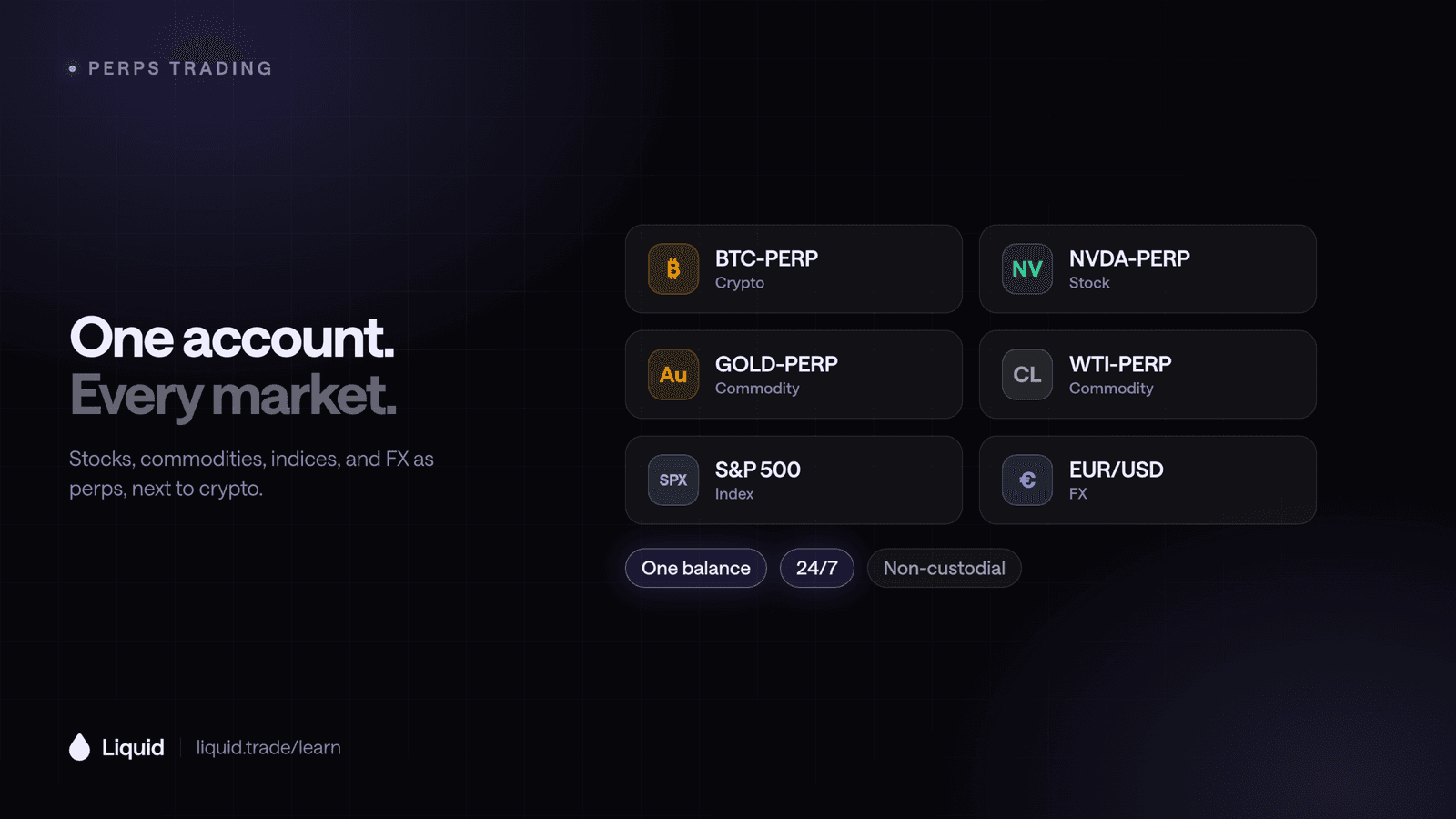
Yes. Liquid lists crypto, stocks, commodities, indices, and FX as perpetual futures in one market list, traded from one non-custodial account. Bitcoin, Nvidia, gold, crude oil, the S&P 500, and EUR/USD sit side by side in the market selector, and every one of them trades 24/7, including weekends. What you can trade depends on your location and account eligibility.
These are derivatives. A stock perp gives you long or short price exposure to a company, not shares. A gold perp tracks the gold price, and you never hold metal. That distinction matters more than the asset label, so it is worth understanding before you size a position.
What Are TradFi Perpetual Futures?
A TradFi perp is a perpetual futures contract whose reference price comes from a traditional market rather than a crypto token. It works like a crypto perp: there is no expiry date, you post collateral, you choose long or short, and you can apply leverage. Funding payments help keep the contract's price close to its reference.
On Liquid, the traditional markets include:
- Stocks: selected public companies, such as Nvidia and Tesla.
- Commodities: gold, silver, platinum, copper, crude oil (WTI), Brent, natural gas, and others.
- Indices: the S&P 500, the Nasdaq 100, and others.
- FX: EUR/USD, GBP/USD, USD/JPY, the US Dollar Index, and other major pairs.
The Markets directory shows the current list. For a tour of how each market type behaves, read what every market on Liquid is.
Which Perps Platforms Let You Trade Stocks and Commodities, Not Just Crypto?
Liquid does. Rather than opening a separate account for each asset class, you open one Liquid account, fund it once, and pick the market. Liquid routes each market to an on-chain venue that lists it, so the venue, fees, and margin rules can differ between, say, BTC and gold. The order ticket shows which applies before you submit.
Leverage caps also differ by market. At the time of writing, the market selector shows 40x on BTC, 25x on gold, 20x on WTI crude, 20x on Nvidia, and 50x on EUR/USD. Limits can change with position size, so check the live ticket and the leverage documentation.
Perps vs. CFDs: What Is the Difference?
Both give you price exposure without owning the underlying asset, and both let you go long or short with leverage. The difference is in who you trade against and who holds your money.
Two ways to get leveraged price exposure
Scroll horizontally to compare
| Question | CFD with a broker | Perpetual on Liquid |
|---|---|---|
| Who holds your collateral? | The broker | You keep control; the app is non-custodial |
| Who sets the price? | The broker, usually from its own feed | An on-chain venue's order book or price methodology |
| Ongoing cost | Overnight financing set by the broker | Funding between longs and shorts, plus route fees |
| Trading hours | Usually follow the underlying market | 24/7, including weekends |
| Expiry | None for most CFDs | None |
CFDs are also restricted or unavailable in some countries, including the US. Perps carry their own eligibility rules, so check what your account can access.
Can I Trade Crypto and Macro From the Same Account?
Yes. A Liquid account holds one balance, and you can trade a BTC perp and a crude oil perp from it without moving money between apps. That makes it simple to act on a macro view, such as a weaker dollar or an oil supply shock, alongside your crypto positions.
One detail: because markets route to different venues, cross margin is generally shared within a venue, not across every market in the app. A gain on one market may not automatically support a position that sits on another venue. The cross margin vs. isolated margin guide explains how pooled collateral works.
Can I Trade Commodities and Forex With Self-Custody?
Yes. Liquid is non-custodial: you control the wallet that signs your trades and transfers, and the same account trades gold, oil, and FX perps. The security documentation explains how that works. Self-custody removes broker custody risk, but it does not remove market risk, venue risk, or the responsibility to keep your account secure.
How to Check a TradFi Perp Before You Trade
- Confirm the exact contract: the ticker, the reference price, and the venue it routes to.
- Read the live funding rate and route-specific fees.
- Check the maximum leverage for your order size, then choose a lower multiplier that fits your plan.
- Know when the underlying market is closed. Weekend prices can gap when the cash market reopens.
- Set a take-profit and stop-loss before you walk away.
For more detail on each asset class, read where to trade stock perps, how to short gold and oil, and how to trade forex as perpetual futures.
Educational content only — not investment advice. Trading perpetual futures involves substantial risk and may not be suitable for every investor. Past performance is not indicative of future results.
Keep reading
All articles →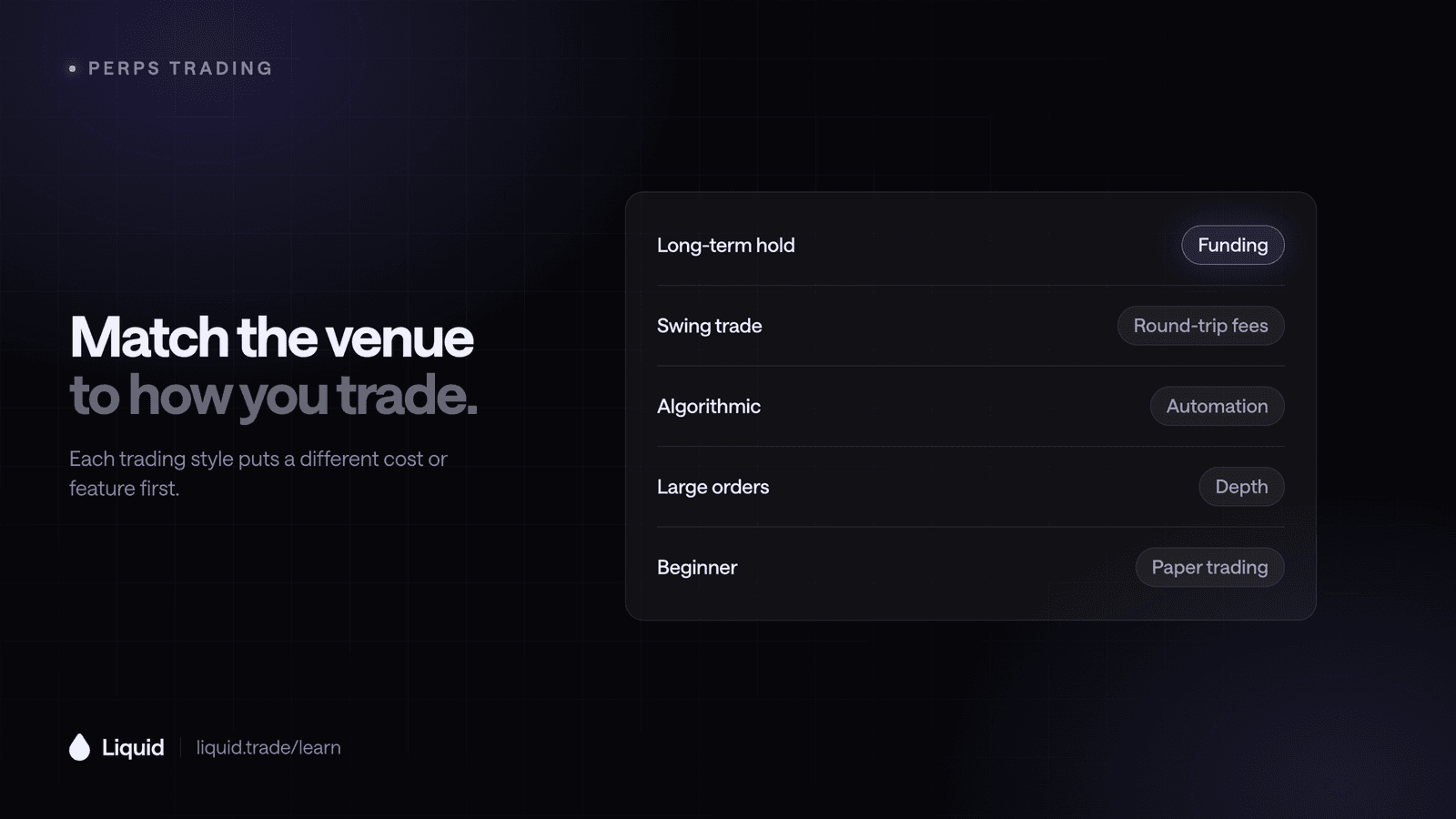
Perps Trading
Which Perps DEX Is Best for Your Trading Style?
The right perps DEX depends on how you trade. Long-term holders should compare funding, swing traders total round-trip cost, algorithmic traders programmatic access, and large traders depth. Here is what to check for each style.
Perps Trading
Where to Trade Perpetual Futures: A Platform Guide
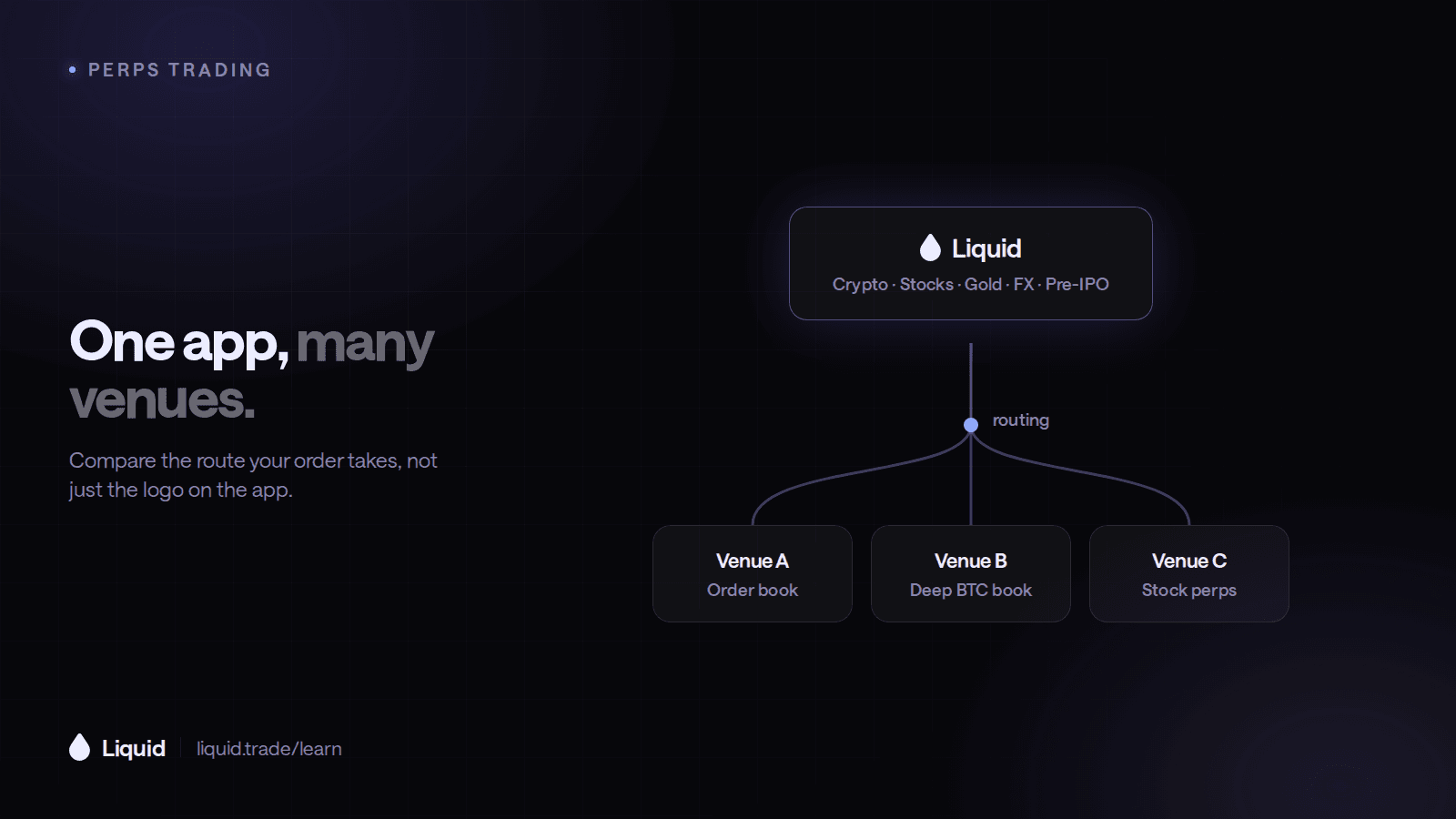
Compare perpetual trading platforms by the markets, execution, custody, costs, and controls you actually need.
Perps Trading
Perpetual Futures Fees: How to Compare the Total Cost
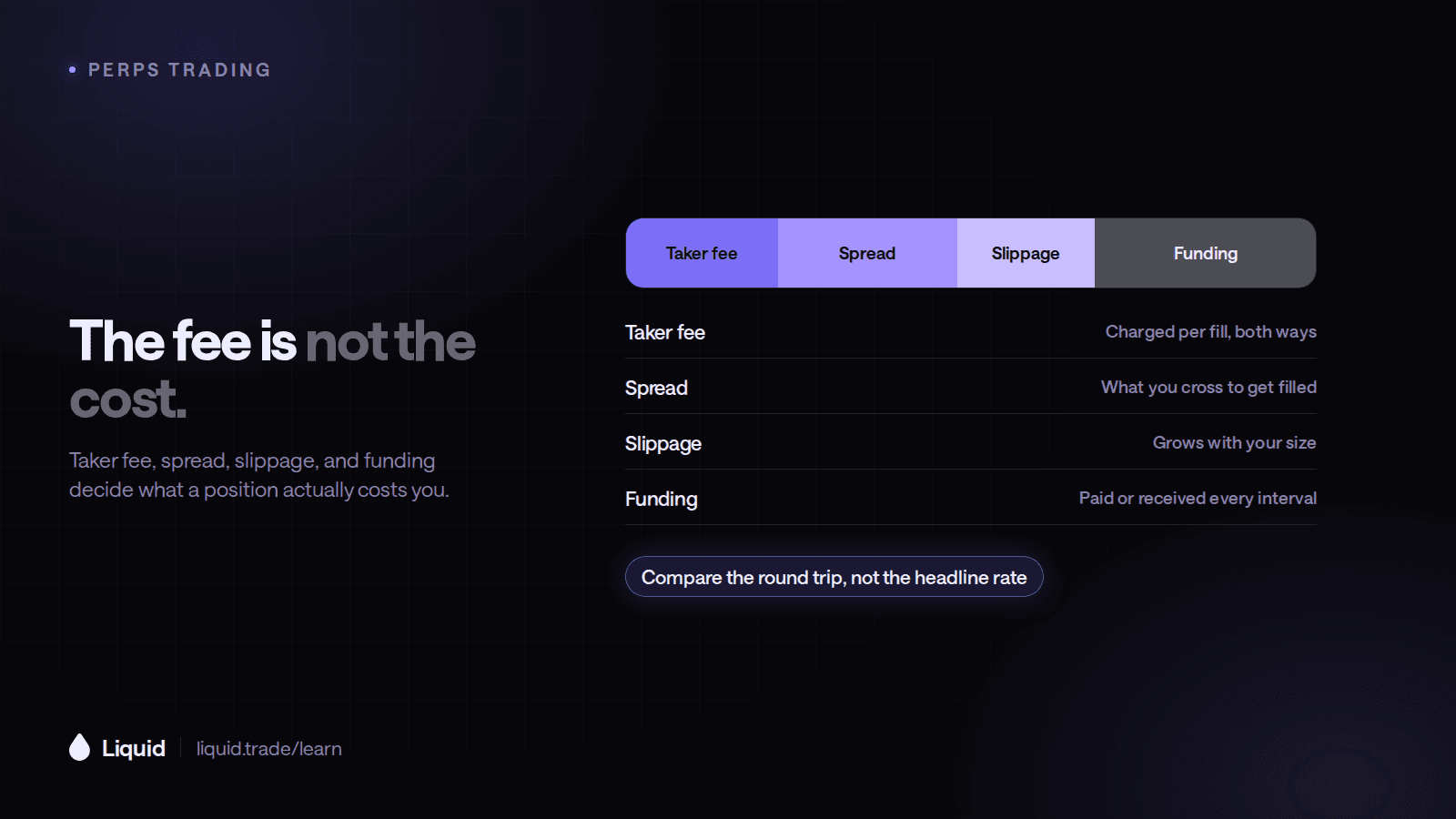
Understand the complete cost of a perpetual trade with clear examples of entry, exit, funding, spread, and slippage.
Put what you learned to work.
Trade crypto, stocks, commodities, FX, indices, and pre-IPO names — plus prediction markets. Prediction contracts are unleveraged; eligible perpetual markets offer multipliers of up to 50×.