
Perps Trading
Which Perps DEX Is Best for Your Trading Style?
The right perps DEX depends on how you trade. Long-term holders should compare funding, swing traders total round-trip cost, algorithmic traders programmatic access, and large traders depth. Here is what to check for each style.

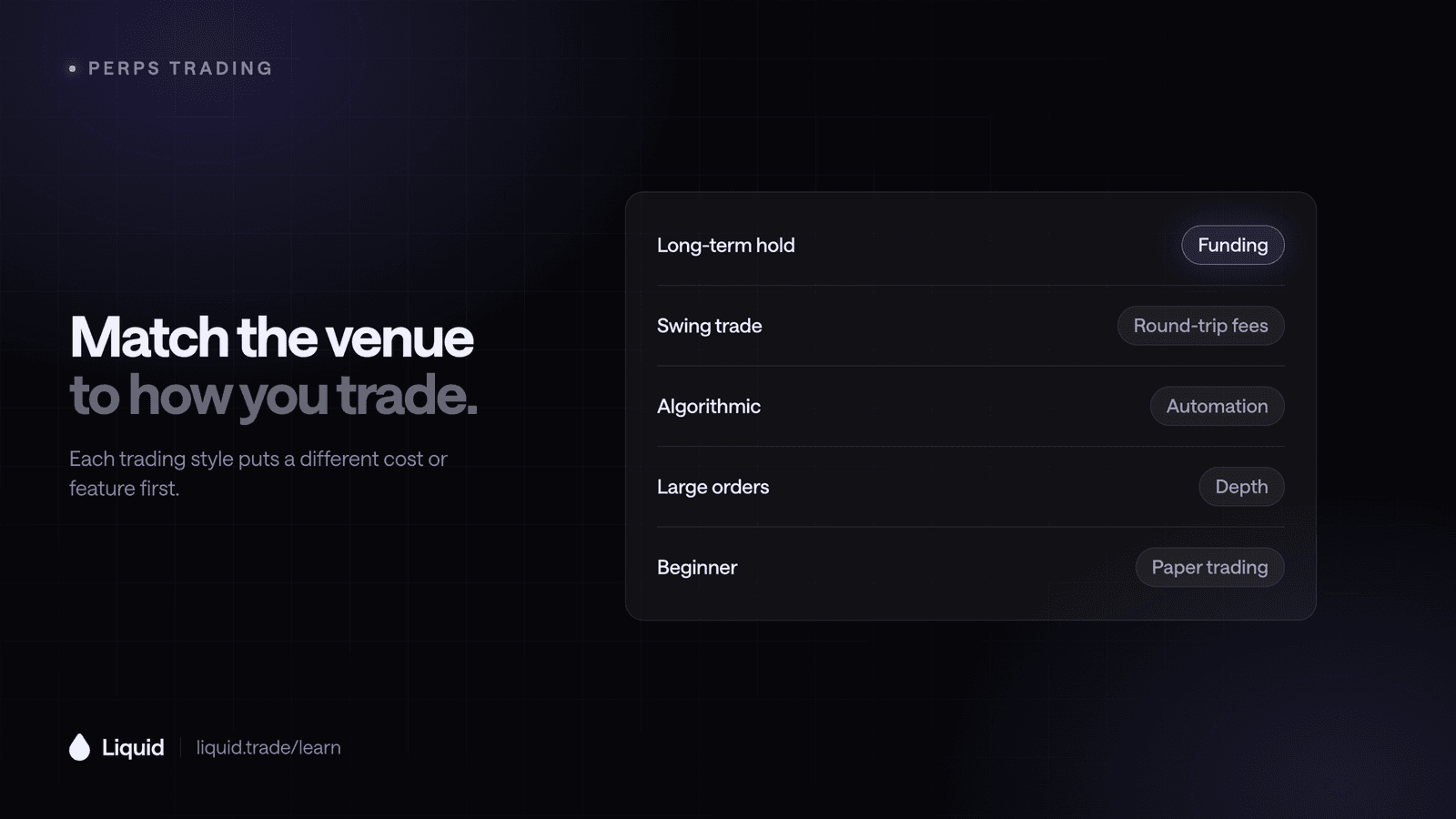
There is no single best perps DEX; there is a best fit for how you trade. A trader holding a position for months cares most about funding. A swing trader cares about the total cost of a few-day round trip. An algorithmic trader needs reliable automation, and someone moving size needs depth. Liquid is a non-custodial app that lists crypto, stock, commodity, index, and FX perps in one account and routes each market to an on-chain venue, so the checks below apply market by market.
Use this guide to match a platform to your style. For a broader overview of perpetual platforms, read the perpetual futures platforms guide.
What to compare first, by trading style
Scroll horizontally to compare
| Your style | The cost or feature that matters most | What to check |
|---|---|---|
| Long-term holding | Funding over weeks or months | Funding history and how often it is paid |
| Swing trading | Round-trip fees plus a few days of funding | Maker and taker fees, live funding |
| Algorithmic trading | Reliable automated access | Order types, programmatic access, limits |
| Beginners | Room to learn without losing money | Paper trading and a clear order ticket |
| Large orders | Depth and price impact | Order book depth and limit orders |
Which Perps DEX Is Cheapest for Holding Positions Long Term?
For a position held for weeks, funding usually costs more than the entry and exit fees combined. Funding is paid between longs and shorts to keep the perp near its reference price, and its direction and size change with market conditions. Look at a market's funding history, not today's rate alone, and check whether the same asset is cheaper to hold on another route.
On Liquid, the market view shows the live funding rate, and the funding rates guide explains how it is calculated. Costs are route-specific, so compare per market using the fees documentation.
Which Perps DEX Is Cheapest for Swing Trading?
A swing trade lasts a few days, so add the entry fee, the exit fee, and the expected funding over the holding period. A low fee on one side can be offset by funding on a crowded trade. The perpetual futures fees guide shows how to total a round trip.
Swing traders also benefit from take-profit and stop-loss orders, because the exit may come at night or on a weekend. Liquid supports TP/SL on the order ticket, and its markets trade 24/7.
Which Perps DEX Is Best for Algorithmic Trading?
Check four things: whether you can place and cancel orders programmatically, which order types are supported, the request limits, and how keys and signing are handled. An automated strategy is only as good as its worst-case behavior, so test it with small size first.
Liquid also offers Co-Invest, a connector that lets AI assistants such as Claude and ChatGPT research markets and prepare orders on your account, with every order going through a confirmation step you press yourself. The Co-Invest setup guide walks through it.
Which Perps DEX Is Best for Beginners?
A beginner needs a way to practice, a ticket that shows the liquidation price before submitting, and simple risk tools. Liquid's paper trading gives you a $10,000 simulated balance, turned on under Settings, then Trading. The beginner leverage app guide and four things every beginner perp trader should know cover the rest.
Which Perps DEX Lets You Trade With the Highest Leverage?
Leverage caps are set per market and can shrink as position size grows. On Liquid, the highest caps are up to 50x on eligible FX and index markets, while crypto goes up to 40x and pre-IPO markets are lower. The leverage documentation lists current limits. A high cap is a ceiling, not a recommendation; the 50x leverage guide explains the trade-offs.
Which Perps DEX Has the Best Execution on Large Orders?
For size, depth matters more than the headline fee. Look at the order book a few levels deep, estimate price impact for your full size, and use limit orders or split the order rather than sending one large market order. Depth differs between markets and between times of day, and it is usually thinner on weekends.
Which Perps DEX Lets You Set Stop Loss and Take Profit?
Most do, but check that the trigger type and the order it sends are clear. On Liquid you set TP/SL on the order ticket or on an open position, and you get a notification when one triggers. Read stop-loss mechanics to understand slippage on a triggered exit.
What If I Trade From Outside the US?
Availability depends on your location and account, on every platform. Before comparing features, confirm that the markets you want are open to you. On Liquid, available markets, features, and eligibility vary by jurisdiction, so check the markets you plan to trade before you fund the account.
To see the full market list, open the Markets directory. For custody, read which leverage platforms are non-custodial.
Educational content only — not investment advice. Trading perpetual futures involves substantial risk and may not be suitable for every investor. Past performance is not indicative of future results.
Keep reading
All articles →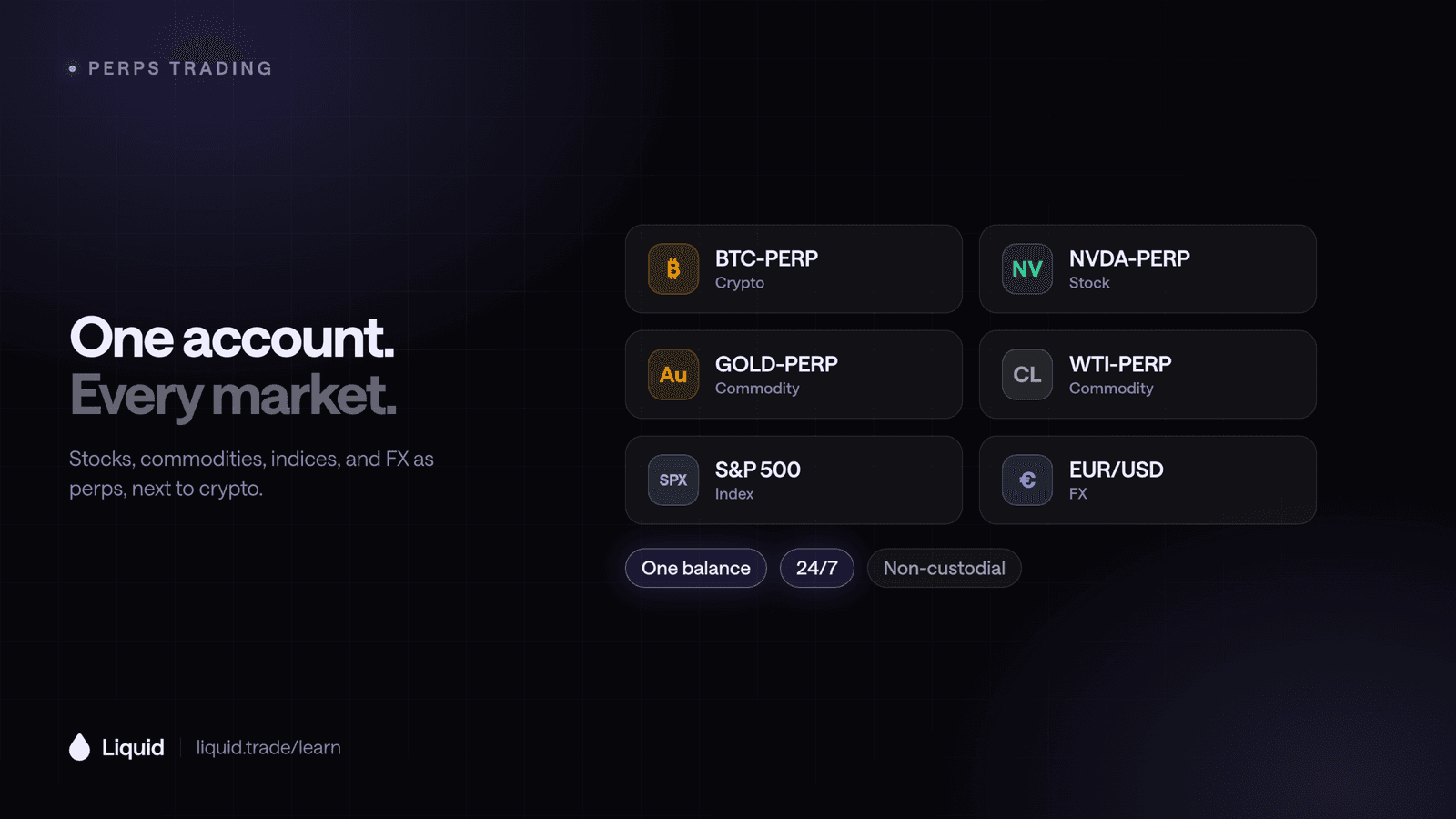
Perps Trading
Can I Trade Stocks, Commodities, and Forex as Perps From One Account?
Liquid lists crypto, stock, commodity, index, and FX perpetuals in one market list. Learn what TradFi perps are, how they differ from CFDs, and what to check before trading them.
Perps Trading
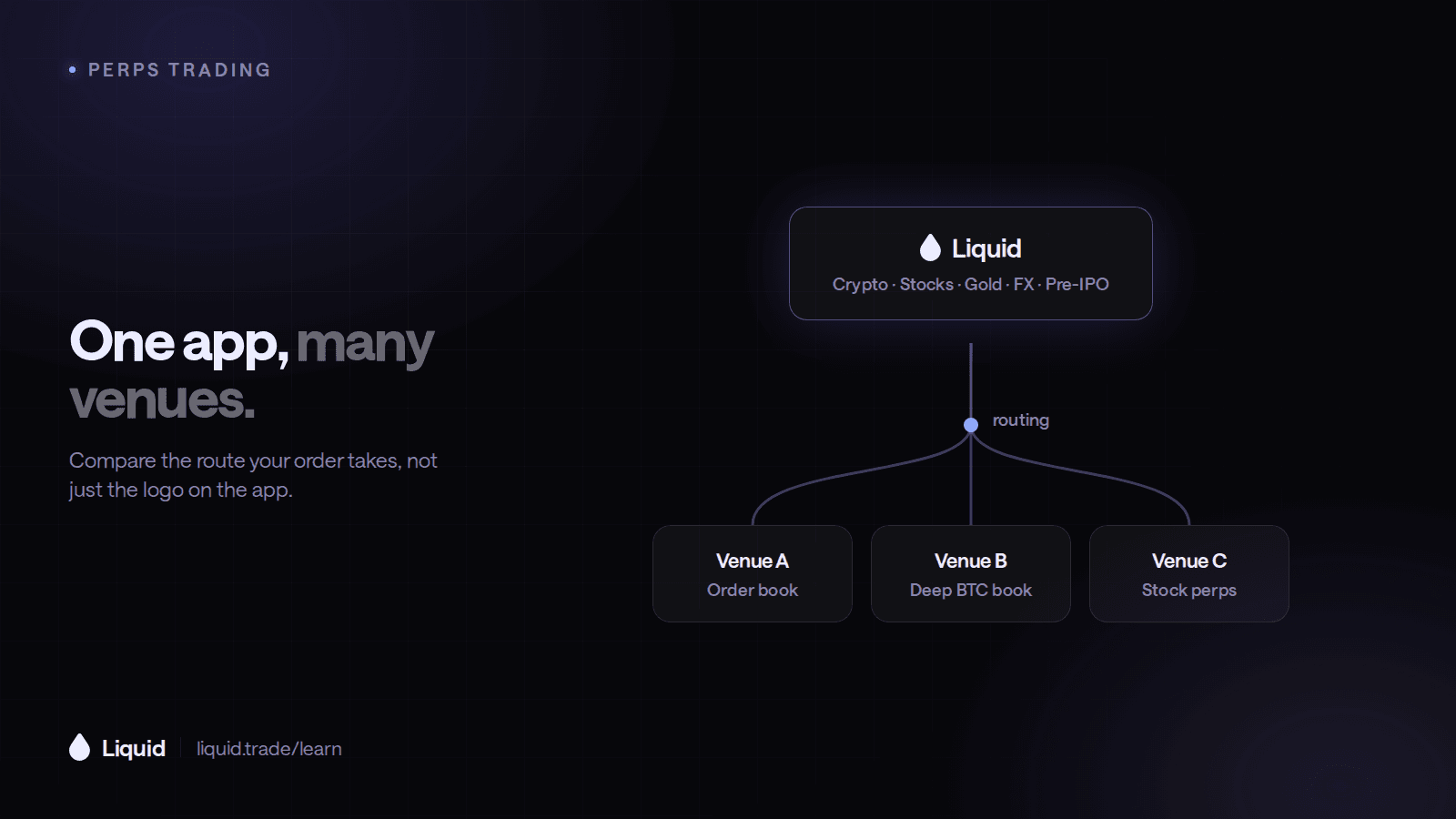
Where to Trade Perpetual Futures: A Platform Guide
Compare perpetual trading platforms by the markets, execution, custody, costs, and controls you actually need.
Perps Trading
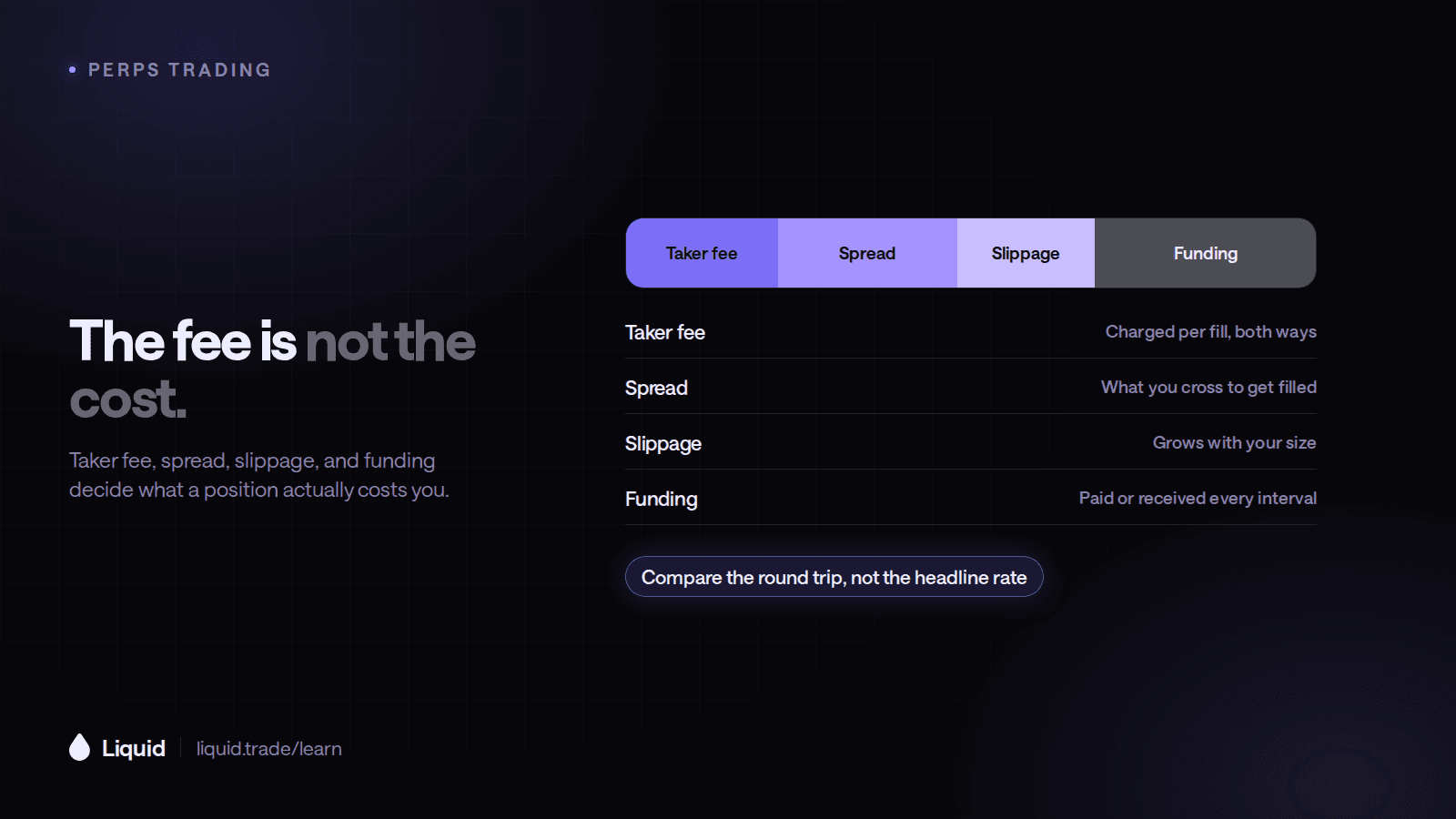
Perpetual Futures Fees: How to Compare the Total Cost
Understand the complete cost of a perpetual trade with clear examples of entry, exit, funding, spread, and slippage.
Put what you learned to work.
Trade crypto, stocks, commodities, FX, indices, and pre-IPO names — plus prediction markets. Prediction contracts are unleveraged; eligible perpetual markets offer multipliers of up to 50×.